Lighting control and building automation are explicitly named in the EU taxonomy: activity 7.5 of Delegated Regulation (EU) 2021/2139 covers the installation, maintenance and repair of instruments and devices for measuring, regulating and controlling the energy performance of buildings, including presence and daylight sensors, building automation systems and lighting controls. For companies, investors and lenders, this means that such a measure can be classified as a contribution to climate change mitigation within the meaning of the taxonomy, provided all conditions are met and documented. This guide explains the wording, the conditions and what they mean for your investment decision.
What the EU taxonomy is
The EU taxonomy is a classification system for environmentally sustainable economic activities. It is based on the Taxonomy Regulation (EU) 2020/852, which has been in force since 12 July 2020. It sets six environmental objectives: climate change mitigation, climate change adaptation, water and marine resources, the circular economy, pollution prevention, and biodiversity and ecosystems.
Delegated acts containing technical screening criteria determine which activity makes a substantial contribution and when. For climate change mitigation and adaptation, this is Delegated Regulation (EU) 2021/2139, which has applied since January 2022. For an activity to be considered taxonomy-aligned overall, the regulation requires it to meet four overarching conditions. In simplified terms, it must make a substantial contribution to an environmental objective, do no significant harm to the other objectives ("Do No Significant Harm", DNSH), comply with minimum safeguards and meet the technical screening criteria.
Activity 7.5: the wording
Chapter 7 of the Climate Delegated Act covers construction and real estate. In essence, activity 7.5 reads: installation, maintenance and repair of instruments and devices for measuring, regulation and controlling energy performance of buildings. It makes a substantial contribution to climate change mitigation if it consists of one of the following individual measures:
| Point | Individual measure under 7.5 | Relevance to lighting control |
|---|---|---|
| a | Zoned thermostats, smart thermostat systems and sensing equipment, including presence and daylight sensors | Direct: presence and daylight sensors |
| b | Building automation and control systems, building energy management systems, lighting control systems and energy management systems | Direct: lighting control, energy management |
| c | Smart meters for gas, heat, cooling and electricity | Indirect: metering as a data basis |
| d | Façade and roofing elements with a solar shading or solar control function | No direct relevance |
Three points matter in practice:
- Enabling activity: 7.5 is explicitly classified as an enabling activity under Article 10(1)(i) of the Taxonomy Regulation. It does not reduce consumption itself but enables the building to be operated efficiently.
- No minimum value: unlike many building activities, 7.5 does not require a specific efficiency gain for the contribution to climate change mitigation. What matters is that the measure belongs to one of the categories listed.
- Lean DNSH assessment: for 7.5, only climate change adaptation has to be assessed, in accordance with the generic Appendix A; according to the delegated act, nothing needs to be assessed for water, the circular economy, pollution or biodiversity.
The delegated act names NACE codes F42, F43 and M71, among others, as typical economic sectors, in other words construction and installation trades and engineering firms.
Activity 7.3: when the luminaires are replaced too
If you renew the luminaires together with the controls, activity 7.3, "Installation, maintenance and repair of energy efficiency equipment", is also relevant. This includes the installation and replacement of energy-efficient light sources. The hurdles are higher here: the measures must comply with the national minimum requirements arising from the transposition of the EU Energy Performance of Buildings Directive and, where an energy label exists, be rated in the two highest populated energy efficiency classes. Further DNSH criteria also apply to 7.3.
In practice, this means that the lighting control itself falls under 7.5, while the new LED luminaires fall under 7.3 with their own assessment.
What this means for investors and finance
The taxonomy takes effect mainly through reporting. Non-financial undertakings that are required to report disclose what proportion of their turnover, capital expenditure (CapEx) and operating expenditure is taxonomy-aligned. Financial undertakings disclose what proportion of their investments and loans relates to sustainable activities. This gives rise to three perspectives:
- For building owners and companies: expenditure on lighting control can be allocated to an explicitly named taxonomy activity. How it is reflected in your CapEx KPI is governed by the disclosure rules; clarify the allocation with your auditor.
- For investors and real estate funds: building automation and lighting control are a traceable individual measure whose climate contribution is anchored in the delegated act.
- For finance: banks have to determine their own taxonomy ratio. A properly documented measure with a clear allocation makes this assessment easier. Whether a bank offers better terms as a result is its own decision.
Documentation: what you need as evidence
Taxonomy alignment is not certified; it is determined by the reporting company and audited. Documents that make the allocation to 7.5 traceable are therefore helpful:
- A specification of works showing that sensors, lighting control and energy management are being installed.
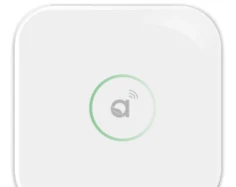
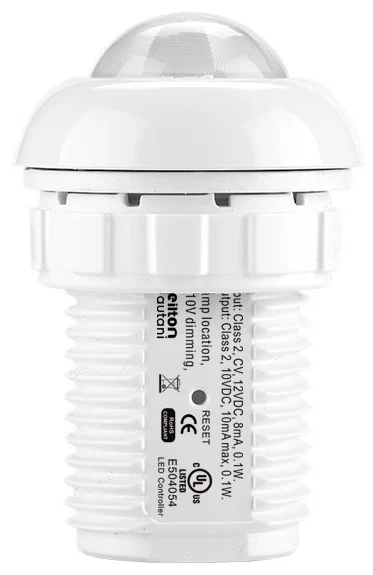
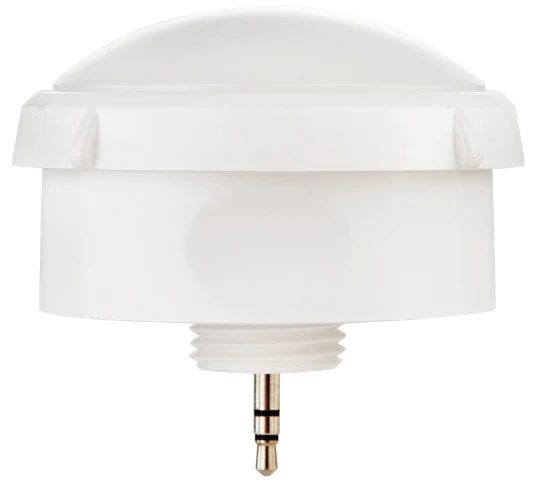
- Data sheets for the components used, for example presence and daylight sensors such as the IFS105SE or EFS106.
- Commissioning and zoning plans showing how occupancy detection and zoning have been implemented.
- Monitoring data demonstrating the effect in operation, see Energy monitoring and occupancy data.
- A climate risk assessment for the DNSH assessment on climate change adaptation, where your auditors require one.
Taxonomy, funding and legal obligation: three different things
A taxonomy-aligned measure does not receive a grant as a result. Funding is governed by separate programmes: lighting control can be funded at 15 % through the BEG EM as part of a class B building automation package, whereas lighting as a separate individual measure has been removed since 21 July 2026. The building automation classes referred to are those defined in DIN V 18599-11.
The legal obligation, in turn, arises from the GModG, see German energy laws and lighting control. Ideally, a measure covers all three levels: it fulfils the obligation, is funded as part of a building automation package and can be allocated to the taxonomy. You can estimate the possible savings with the savings calculator.
How we support you
We survey your building on site, plan the sensors and zoning and show you the result in 3D in advance in Sensora. We usually carry out the installation ourselves, or your own electrical contractor can do so if you prefer. We implement every project with the AU-Manager, so occupancy detection, zoning and monitoring are included. You receive the specification of works, zoning plans and monitoring data in a form that allows your auditors to follow the allocation. For your project, you can reach us via our contact page.
Try it interactively
Savings calculator
Frequently asked questions
Is lighting control covered by the EU taxonomy?
Yes. Activity 7.5 of Delegated Regulation (EU) 2021/2139 names, among other things, presence and daylight sensors as well as lighting control systems, building automation and energy management systems as individual measures that make a substantial contribution to climate change mitigation. As of October 2026, not legal advice.
Does lighting control have to demonstrate a specific saving to be taxonomy-aligned?
For the contribution to climate change mitigation under 7.5, the delegated act does not require a minimum value; what matters is that the measure belongs to one of the individual measures listed. The DNSH assessment on climate change adaptation and the minimum safeguards must also be observed.
What is the difference between activity 7.3 and 7.5?
7.5 covers measuring, regulation and control technology such as sensors and lighting control. 7.3 covers energy efficiency equipment, including light sources, with additional requirements, for example regarding the two highest populated energy efficiency classes, and further DNSH criteria.
Do I receive funding for a taxonomy-aligned measure?
No, the taxonomy is a classification system, not a funding programme. However, lighting control can be funded at 15 % through the BEG EM as part of a class B building automation package.
Which documents help as evidence?
A specification of works, data sheets for the sensors, commissioning and zoning plans, monitoring data and, where applicable, a climate risk assessment for the DNSH assessment. The classification is carried out by the reporting company together with its auditor.
Sources
- Delegated Regulation (EU) 2021/2139, Annex I activities 7.3 and 7.5 (Official Journal L 442 of 9 December 2021) – EUR-Lex
- European Commission: EU taxonomy for sustainable activities
- European Commission: Corporate sustainability reporting
- German Chamber of Public Accountants (WPK): CSRD – questions and answers (as of 22 April 2026, German)