What a lighting control system costs cannot be stated as a flat figure, because the price depends less on the sensor itself than on the conditions on site: the number of luminaires, the condition and interface of the existing LED drivers, mounting height and access, wireless or wired, commissioning and the monitoring you need. In existing buildings the biggest cost drivers are usually not the components but electrical work and labour time on site. You get a reliable quote by providing photos of the driver labels, a floor plan and information on how the space is used. This guide explains which factors determine the price and how to arrive at a reliable calculation.
Cost factors at a glance
| Cost factor | Reduces cost | Increases cost |
|---|---|---|
| Number and layout of luminaires | large, contiguous areas | many small rooms with few luminaires |
| Starting point | LED with dimmable driver in place | conventional luminaires, non-dimmable drivers |
| Driver interface | 0-10 V with 12 V auxiliary supply (AUX) | no auxiliary supply, mixed driver types |
| Mounting height and access | office and corridor heights, clear floors | halls above 6 m, high racking, machinery below |
| Wiring | wireless (Bluetooth Mesh), no new control cables | new bus or control cables in an existing building |
| Commissioning | uniform zones and profiles | many special profiles and coordination loops |
| Monitoring and BMS | standard reporting | custom data points and interfaces |
| Working hours | installation during normal daytime operation | nights, weekends or production breaks |
Number of luminaires and room layout
The number of luminaires determines the quantity: with luminaire-level lighting control, each luminaire usually gets a sensor or a wireless node. The layout matters at least as much. A hall with 200 identical luminaires can be fitted efficiently in series and commissioned with a few profiles. An office floor with many single offices, meeting rooms and ancillary spaces needs more zones, more control points and more coordination. The basics are explained in Luminaire-level lighting control (LLLC).
Retrofit or new luminaires
The biggest lever is whether the existing luminaires can be kept:
- LED luminaires with dimmable 0-10 V or DALI drivers: only the control is retrofitted. This is usually the most economical option because the luminaire stays.
- LED luminaires with non-dimmable drivers: in offices, replacing the driver is often cheaper than a new luminaire. This needs to be checked case by case.
- Fluorescent or non-dimmable legacy installations: the LED retrofit comes first. It makes sense to plan luminaire replacement and sensors in one step.
If you are buying new luminaires anyway, specify sensors and interface at the same time. Adding them later is possible but means a second installation visit.
Driver interface and auxiliary supply (AUX)
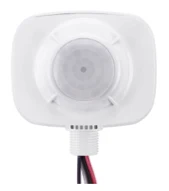
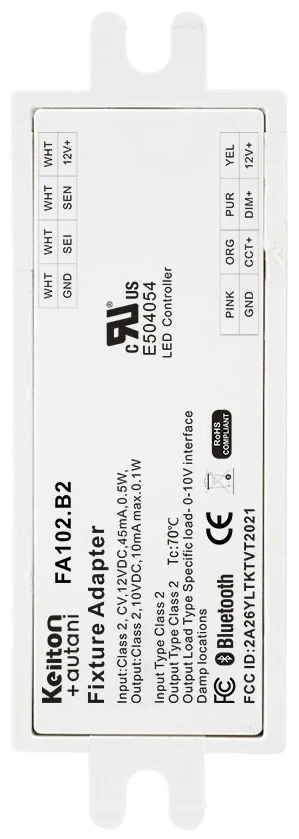
Whether a sensor fits directly into the luminaire is decided by the driver label. If a 0-10 V driver provides a 12 V auxiliary supply (AUX), luminaire sensors such as the EFS106 or the wireless node FA102 can be powered from it, which keeps installation effort low. Without an auxiliary supply there are different routes depending on the space:
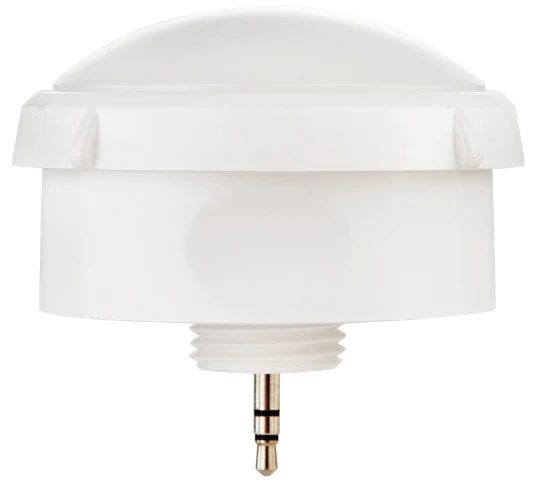
- Halls: the high-bay sensor EFS104 has its own mains power supply and a relay and dims via 0-10 V. It is designed for mounting heights of 6 to 15 m.
- Offices: we check whether replacing the driver is cheaper than a new luminaire. That is often the case.
- DALI drivers: we also retrofit luminaires with DALI drivers, using sensors with a DALI connection and matching the components to your drivers.
Mounting height and access
In offices with ceiling heights around 3 m a ladder is enough. In halls with mounting heights of 8, 10 or 12 m you need a mobile elevating work platform, and the question is whether it can move freely. High racking, machinery, conveyors or cold-storage areas under the luminaires increase the installation time per luminaire considerably, as do floor load limits, barriers and coordination with forklift traffic. Sensor selection for high ceilings is covered in High-bay sensors for warehouses.
Wireless or wired
Conventional wired lighting controls need control cables between sensors, controllers and luminaires. In new buildings that can be planned; in existing buildings it means opening ceilings, fire-protection measures and interruptions. Wireless systems based on Bluetooth Mesh avoid this work: every luminaire with a sensor or node becomes part of the network. Battery-powered sensors such as the BCS107 and wall switches such as the WP108E need no wiring at all. See Retrofitting lighting controls.
Commissioning and programming
After installation, sensors must be registered, zones formed and profiles set up: hold times, background light level, daylight control and schedules. The effort grows with the number of different uses and special requirements. Good upfront planning reduces coordination loops.
Monitoring and BMS integration
Energy monitoring and occupancy data are not an extra gimmick: they prove the savings, reveal malfunctions and provide data for energy audits and ESG reports. With us, the AU-Manager is part of every project. According to its datasheet it supports BACnet/IP, among other protocols, for connection to a building management system. Extra effort arises mainly where custom data point lists, interface tests with the BMS contractor or customer-specific reports are required. See BMS integration via BACnet, Modbus and API.
Work during operation
Whether installation can be done during normal daytime operation or has to take place at night, at weekends or during production breaks has a noticeable effect on cost. Wireless solutions help here too, because work at each luminaire is brief and no ceilings are opened for cables. Plan realistic time windows and clarify access rules, safety briefings and contacts in advance.
How to get a reliable quote
The better the input data, the more accurate the quote and the fewer change orders. These documents help:
- Photos of the driver labels, ideally one clearly legible photo per luminaire type
- Floor plan as PDF or image, with room uses and luminaire positions if available
- Luminaire list with type, quantity and wattage
- Mounting heights and notes on obstacles such as racking, cranes or machinery
- Operating hours and shift pattern
- Requirements for monitoring and BMS and preferred working hours
Based on the floor plan, we plan the sensors and show them to you as a 3D model in Sensora: before you invest, you see which luminaires respond when and where coverage gaps would be. This makes the quote transparent and avoids later changes.
Funding and legal duty
Since 21 July 2026, lighting is no longer a separate eligible measure under the German BEG EM funding programme. Building automation of at least class B according to DIN V 18599-11 is still funded at 15 %, and lighting control can be part of it. The EEW programme excludes general lighting (as of October 2026).
Independently of funding, § 56 of the German Building Modernisation Act (GModG) requires automatic lighting control by 31 December 2029 in non-residential buildings with a heating, air-conditioning or combined ventilation system above 70 kW. Planning early spreads costs better than implementing under time pressure. See German energy laws and lighting control. General information, not legal advice.
Conclusion
The cost of a lighting control system comes mainly from labour, access and wiring, less from the sensors themselves. Reusing existing LED luminaires with dimmable drivers and choosing wireless keeps the effort low in existing buildings. With driver label photos, a floor plan and usage information you get a reliable quote instead of a flat estimate.
How we can help
Our focus is retrofitting: we turn existing LED luminaires with dimmable 0-10 V or DALI drivers into smart lighting with sensors and app-based lighting management – without new luminaires and without new control cables. Details under Retrofit.
We check your drivers from the label photos, plan the sensors on your floor plan and turn that into a transparent quote. Installation is usually carried out by us, or by your own electrical contractor if you prefer. Every project includes the AU-Manager, so occupancy detection, zoning and monitoring are included. Send us your documents via our contact page.
Try it interactively
Savings calculator
Frequently asked questions
How much does lighting control cost per luminaire?
There is no sound flat price per luminaire. The effort depends mainly on whether the existing drivers are dimmable and provide an auxiliary supply, how high the luminaires are mounted and whether installation is possible during operation. A reliable quote is based on driver label photos, a floor plan and usage data.
Is wireless lighting control cheaper than wired?
In existing buildings usually yes, because no new control cables are laid and no ceilings opened. Electrical work is often the largest cost item there. In new buildings with open ceilings the difference is smaller.
Do I need new luminaires for lighting control?
Not if you have LED luminaires with dimmable 0-10 V or DALI drivers; then only the control is retrofitted. With non-dimmable drivers, replacing the driver is often cheaper than a new luminaire in offices; with fluorescent lamps the LED retrofit comes first.
What documents do I need for a quote?
Photos of the driver labels per luminaire type, a floor plan with room uses, a luminaire list, mounting heights, operating hours and your requirements for monitoring and BMS integration.
Is there funding for lighting control in Germany?
Since 21 July 2026, lighting is no longer a separate measure under BEG EM. Building automation of at least class B according to DIN V 18599-11 is funded at 15 %, and lighting control can be part of it (as of October 2026).