
Keilton+autani · Sensors
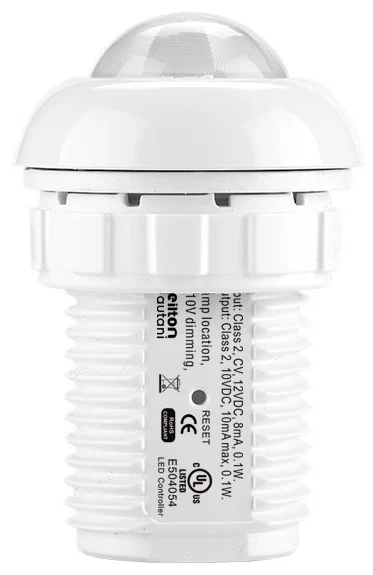
IFS105SE
Round Indoor Sensor for LLLC
Compact Bluetooth luminaire sensor with PIR and daylight harvesting – turns standard luminaires into smart ones (up to approx. 5.5 m).
DetailsGModG · Sensors
§ 56 (6) GModG calls for lighting control with zones and occupancy detection. Which sensor delivers that for you depends mainly on the mounting height.
For GModG lighting you need sensors that detect whether an area is in use and that can be grouped into zones. Simple motion detectors usually just switch on and off and supply no data. Networked presence and daylight sensors dim, form groups and report their data to the monitoring system.
| Area | Mounting height | Suitable sensor |
|---|---|---|
| Office, corridor, meeting room | up to approx. 5.5 m | IFS105SE |
| Office luminaires with AUX | up to approx. 6 m | IFS108 |
| Rooms up to 56 m², high accuracy | Ceiling | EFS107E with PIR and ultrasonic |
| Retrofit without cables | Ceiling | BCS107 with up to 10 years of battery life |
| Warehouses, aisles, narrow areas | 2.4 to 6 m | MWS105E with microwave |
| Hall, luminaire with AUX | 6 to 12 m | EFS106 |
| Hall, luminaire without AUX | 6 to 15 m | EFS104 with its own power supply |
| Outdoors and damp rooms | 6 to 12 m | EFS106W with IP66 |
A simpler solution may meet the legal requirement. But you give up savings and data: without networking there are no groups and no proof of consumption, and every change means a ladder and a technician on site. The comparison cheap motion sensors vs networked lighting control shows the difference. How the technologies work is explained in PIR, ultrasonic, microwave and dual-tech.
As of November 2026. General information, not legal advice. The wording of the law is what counts.
Sensors
Keilton+autani · Sensors
Round Indoor Sensor for LLLC
Compact Bluetooth luminaire sensor with PIR and daylight harvesting – turns standard luminaires into smart ones (up to approx. 5.5 m).
Details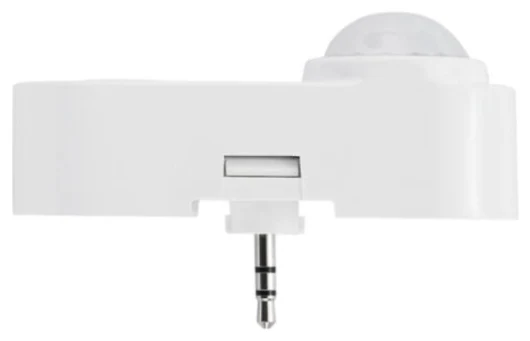
Keilton+autani · Sensors
Indoor Sensor with AUX Interface
Compact luminaire sensor for LLLC/NLC5 – PIR and daylight, optimised for office luminaires (up to approx. 6 m).
Details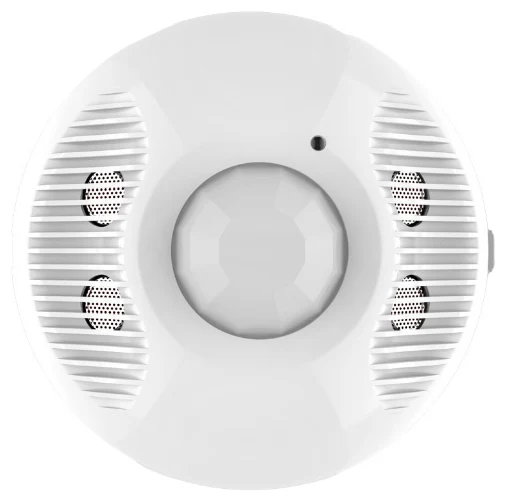
Keilton+autani · Sensors
12 V Dual-Tech Ceiling Sensor (PIR + Ultrasonic)
Dual-tech presence detector with PIR and ultrasonic – high accuracy for rooms up to 56 m², incl. daylight control.
Details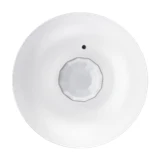
Keilton+autani · Sensors
Battery-Powered Bluetooth Ceiling Sensor
Wireless PIR presence detector with daylight harvesting – up to 10 years of battery life, ideal for retrofits.
Details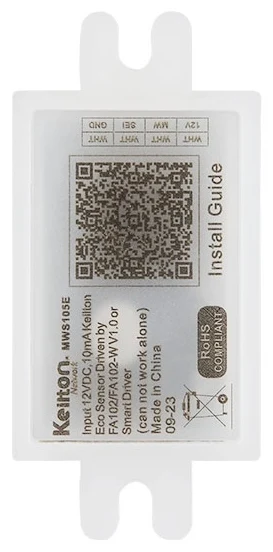
Keilton+autani · Sensors
Integrated 12 V Eco Microwave Sensor
Microwave presence sensor with adjustable sensitivity (0–100 %) – detection 6 to 12 m, mounting 2.4 to 6 m.
Details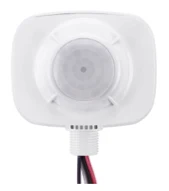
Keilton+autani · Sensors
High-Bay Sensor with Integrated Power Supply (120–277 V AC)
PIR high-bay sensor and controller with power supply for 6 to 15 m mounting height – relay up to 6 A plus 0-10 V dimming.
Details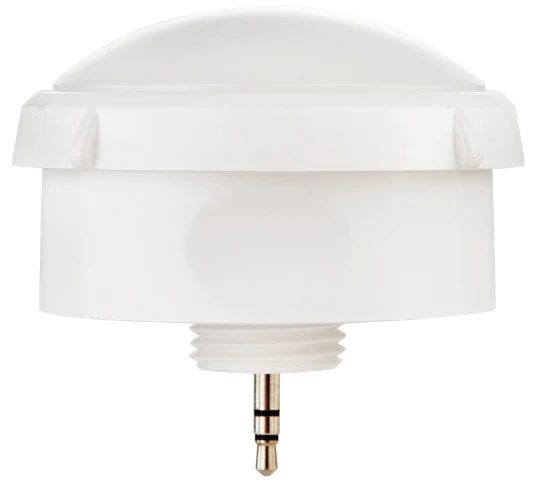
Keilton+autani · Sensors
High-Bay Sensor with AUX Interface (12 V DC)
Low-voltage high-bay sensor for LLLC/NLC5 – PIR + daylight, 6 to 12 m mounting height, plug-and-play.
Details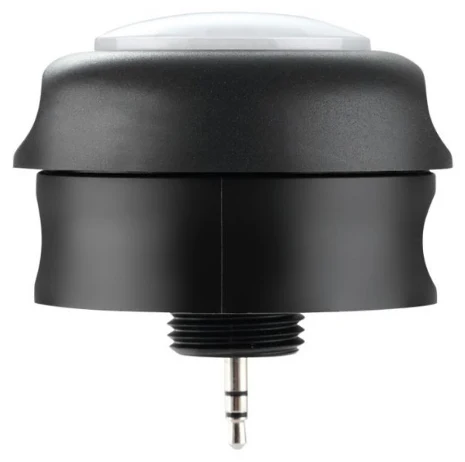
Keilton+autani · Sensors
Rugged IP66 High-Bay Sensor with AUX Interface
Weatherproof high-bay sensor (IP66) in a UV-resistant black housing – for outdoor use, damp locations and 6 to 12 m height.
DetailsNo results – start the sensor finder.
FAQ
§ 56 (6) GModG doesn't name a device type. The lighting control should have occupancy detection. "Should" means this is the rule, and you must be able to justify any deviation. Presence and high-bay sensors are the usual way to do it.
Yes. We carry out every project with the AU-Manager, so all sensors provide occupancy detection, zoning and monitoring.
From about 6 m, high-bay sensors are the right choice: EFS106 up to 12 m, EFS104 up to 15 m. Planning advice is in the guide High-bay sensors for warehouses.
In halls from 6 m we use the EFS104 with its own power supply. In offices and corridors we check the luminaire, and replacing the driver is often the cheapest solution. See 12 V AUX output on the LED driver.
Free initial consultation
Tell us the ceiling height, luminaire type and usage. We'll suggest the right sensors.
Tip: try “high bay”, “IP66” or “daylight”.