
Keilton+autani · Sensors
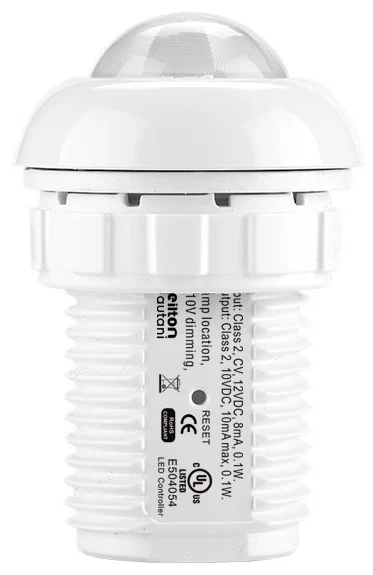
IFS105SE
Round Indoor Sensor for LLLC
Compact Bluetooth luminaire sensor with PIR and daylight harvesting – turns standard luminaires into smart ones (up to approx. 5.5 m).
DetailsLuminaire control
With luminaire control, the intelligence sits on the luminaire. The sensor detects movement and daylight, dims the driver directly and talks wirelessly to its neighbours.
Luminaire control regulates light at the level of the individual luminaire or small groups, instead of switching entire circuits centrally. Specialists call this luminaire level lighting control, or LLLC. For operators, it means finer zones, no new control cables and changes via app.
The guide Luminaire level lighting control explains the technology in detail.
| Luminaire control | Central control by cable | |
|---|---|---|
| Zones | Down to the individual luminaire | Usually per circuit or bus line |
| Retrofit | Wireless, no new control cables | New cables often needed |
| Changes | Via app | Often by a specialist company |
| Suits | Existing buildings and new builds | Mainly new builds |
The comparison Wireless vs wired lighting control looks at the differences in more depth.
Wherever areas are used irregularly: in logistics, industry, offices and retail. As a guide from our projects, sensors alone save more than 60% of lighting electricity, and up to 75% is possible. The savings calculator works out your figures.
In Germany, for non-residential buildings above the 70 kW threshold, § 56 GModG requires automatic lighting control by 31 December 2029. Luminaire control with zones and occupancy detection is a direct way to achieve this. As of November 2026. General information, not legal advice. The wording of the law is what counts.
Sensors
Keilton+autani · Sensors
Round Indoor Sensor for LLLC
Compact Bluetooth luminaire sensor with PIR and daylight harvesting – turns standard luminaires into smart ones (up to approx. 5.5 m).
Details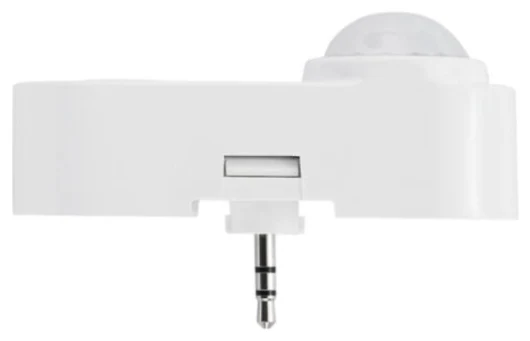
Keilton+autani · Sensors
Indoor Sensor with AUX Interface
Compact luminaire sensor for LLLC/NLC5 – PIR and daylight, optimised for office luminaires (up to approx. 6 m).
Details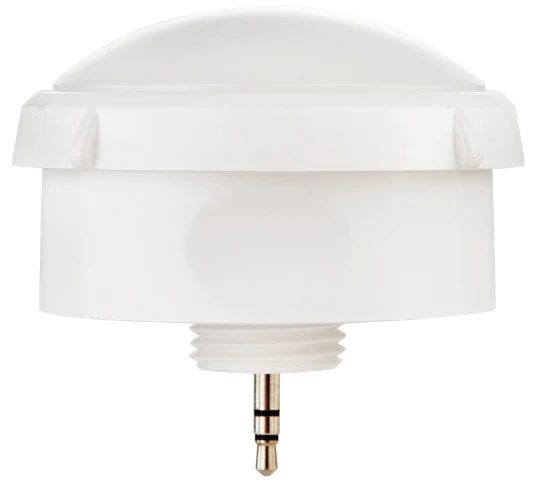
Keilton+autani · Sensors
High-Bay Sensor with AUX Interface (12 V DC)
Low-voltage high-bay sensor for LLLC/NLC5 – PIR + daylight, 6 to 12 m mounting height, plug-and-play.
Details
Keilton+autani · Sensors
High-Bay Sensor with Integrated Power Supply (120–277 V AC)
PIR high-bay sensor and controller with power supply for 6 to 15 m mounting height – relay up to 6 A plus 0-10 V dimming.
Details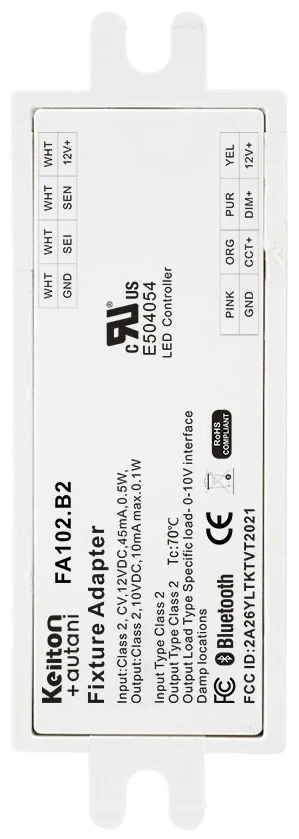
Keilton+autani · Controller & Gateways
Bluetooth Node for Luminaires (LLLC)
Miniature Bluetooth node for luminaire integration – 0-10 V dimming, sensor-ready for Eco sensors.
Details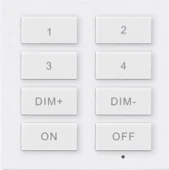
Keilton+autani · Controls
8-Button Bluetooth Wall Switch (Battery)
Wireless 8-button scene wall switch with dimming and battery operation (CR2032) – easy retrofit.
DetailsNo results – start the sensor finder.
FAQ
Lighting control is the umbrella term. Luminaire control means regulation directly on the luminaire, unlike central systems that switch entire circuits.
Yes, if the LED driver is dimmable and has a 0-10 V or DALI interface. See Reading the LED driver label.
The sensors keep working independently in their groups, so the light still works without a connection to the AU-Manager.
The CR05 gateway integrates up to 100 Bluetooth nodes per zone. We divide larger buildings into several zones.
Free initial consultation
Send us a photo of the driver's rating plate. We'll check it free of charge.
Tip: try “high bay”, “IP66” or “daylight”.