DALI luminaires are well suited to a sensor retrofit because the driver is already digitally dimmable. Three questions are decisive: which DALI generation the drivers use (DALI, DALI-2 or D4i), whether there is already a DALI control system with a bus line or the drivers are simply connected individually, and whether the luminaires should be controlled together via broadcast or individually addressed. Once these points are clear, the existing installation becomes occupancy and daylight control without replacing luminaires.
DALI in two minutes
DALI (Digital Addressable Lighting Interface) transmits control commands digitally over a pair of wires. Data and bus power share the same two wires, and polarity does not matter. Each control gear can be given its own address, assigned to groups and report its status, for example a lamp failure. A DALI line addresses up to 64 control gear in up to 16 groups; larger installations consist of several lines. How DALI compares with wireless control is covered in Wired or wireless lighting control?, and the wireless side in Bluetooth Mesh in lighting control.
What to check before the retrofit
DALI, DALI-2 or D4i?
The label either just says "DALI" with DA/DA terminals or additionally shows a DALI-2 or D4i logo. All speak the same basic language but differ in scope:
| Generation | Marking | Meaning for the retrofit |
|---|---|---|
| DALI (first generation) | "DALI", DA/DA terminals | Dimming and switching work; check details in the datasheet |
| DALI-2 | DALI-2 logo | Certified under the current programme, more reliable interoperability |
| D4i | D4i logo | Additionally luminaire, energy and diagnostics data; auxiliary supply optional |
Older DALI drivers are no obstacle. You should still know the datasheet, because minimum dimming level, dimming curve and behaviour on bus failure vary. How to read the label is explained in Reading the LED driver label.
Is there a DALI control system or just DALI drivers?
This is the most important question, and the answer often comes as a surprise. In many buildings, luminaires were fitted with DALI drivers but the control terminals were never connected. The luminaires are simply switched on and off at mains voltage via wall switches. For a retrofit this is the most favourable case: there is no existing control system for new sensors to compete with.
If, on the other hand, there is a DALI bus line with a central controller, push buttons or a link to the building management system, there are two routes:
- Integration: the new sensors work together with the existing control system. This requires both sides to be compatible and a clear rule on who sends which commands.
- Replacement: the old control system is decommissioned and the sensors take over. This often makes sense if the controller is outdated, spare parts are unavailable or nobody knows the programming any more.
Broadcast or addressed?
DALI has two ways of sending commands. With broadcast, commands go to all drivers on a line and no addressing is needed. This suits a setup where each luminaire has its own sensor and only controls itself, as in luminaire-level lighting control. With addressed control, each driver is given a short address or group so that a sensor can target several luminaires. This requires commissioning with address assignment but allows finer zones and feedback. Which approach fits depends on room size, desired zoning and existing wiring.
Bus power and cables
A DALI line needs a bus power supply. Depending on the concept, it is provided by a controller, a separate bus power supply or a solution inside the luminaire. If the DALI terminals of several luminaires are already linked by a cable, it may be possible to keep using it. New bus cables through the ceiling, however, are what we want to avoid in a retrofit: between luminaires, the sensors communicate wirelessly.
How the retrofit works
- Survey: record driver types, existing control system, cables, mounting heights and use. A photo of the labels sent to [email protected] is enough for an initial assessment.
- Concept: decide whether control is per luminaire or per zone, whether broadcast is sufficient or addressing is needed, and whether an existing control system is integrated or replaced.
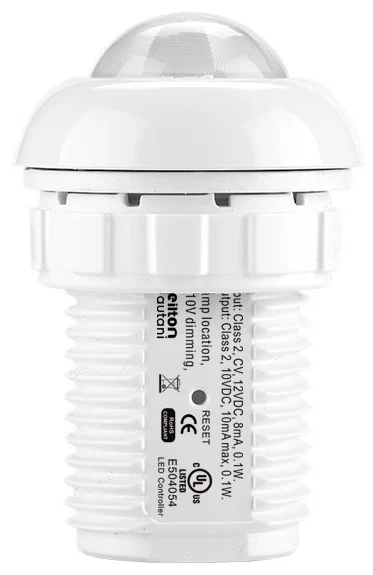
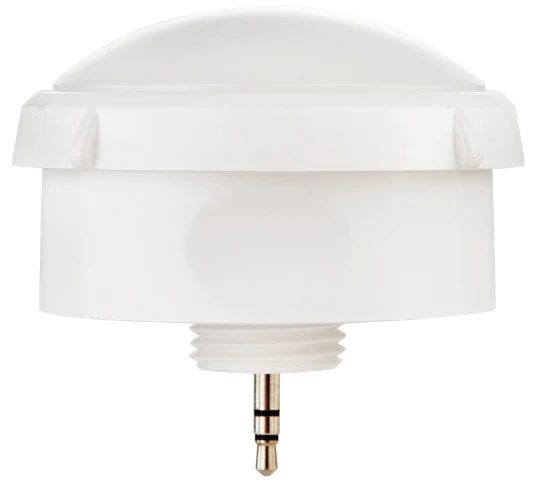
- Component selection: sensors with a DALI connection, matched to your drivers. In mixed installations with 0–10 V drivers, suitable 0–10 V sensors such as the IFS105SE or EFS106 are used there.
- Pilot installation: one room is equipped and tested in operation, especially dimming behaviour and minimum dimming level.
- Installation and commissioning: section by section during operation, groups and profiles via app.
The overall approach is described in Retrofitting lighting controls in existing buildings.
Is it worth it?
DALI luminaires already meet the most important requirement: they are dimmable. As a guideline from our projects, sensors alone save more than 60 % of lighting electricity; with daylight harvesting and background lighting the savings potential is up to 92 %. Occupancy data that helps with space planning comes on top. For non-residential buildings with a heating, air-conditioning or combined ventilation system above 70 kW, Section 56 of the German GModG requires automatic lighting control by 31 December 2029, with zoning and occupancy detection as the rule. General information, not legal advice.
How we can help
Our focus is retrofitting: we turn existing LED luminaires with dimmable 0-10 V or DALI drivers into smart lighting with sensors and app-based lighting management – without new luminaires and without new control cables. Details under Retrofit.
For DALI luminaires we check the driver generation, the existing control system and the wiring, and match sensors with a DALI connection to your drivers. Installation is usually carried out by us, or by your own electrical contractor if you prefer. Every project includes the AU-Manager, so occupancy detection, zoning and monitoring are included. Get in touch via our contact page.
Try it interactively
Sensor finder
Frequently asked questions
Can DALI luminaires be retrofitted with occupancy sensors?
Yes. Since DALI drivers are already digitally dimmable, sensors with a DALI connection can be added without replacing the luminaires. Check the driver generation, any existing control system and whether control should be via broadcast or addressing.
What is the difference between DALI and DALI-2?
DALI-2 is the current DALI Alliance certification programme based on the latest version of IEC 62386. Certified devices are independently tested, which improves interoperability. Older DALI drivers can still be controlled, but their datasheet should be checked.
What does D4i mean for LED drivers?
D4i is an extension of DALI-2 certification for drivers and control devices in luminaires. D4i drivers provide luminaire, energy and diagnostics data; an auxiliary supply for control devices is optional.
Do I need a new bus cable for DALI sensors?
Not necessarily. If sensors are connected directly at the luminaire and communicate wirelessly with each other, new bus cables through the ceiling are not needed. An existing DALI cable can be kept in use depending on the concept.
What is DALI broadcast?
With broadcast, commands go to all drivers on a DALI line without assigning addresses. This suits setups where each luminaire has its own sensor. For finer zones, drivers are addressed individually or in groups.