DALI or Bluetooth Mesh? Both technologies control professional lighting reliably, but they get there in fundamentally different ways: DALI is a wired bus with its own control cable, while Bluetooth Mesh is a wireless network that needs no additional control cabling. For new buildings with centrally planned electrical installations, DALI is often the obvious choice. For refurbishment during ongoing operation, halls and spaces that change use frequently, there is a lot to be said for Bluetooth Mesh. This comparison shows fairly where each technology has its strengths.
Two routes to the same goal
Modern lighting control is expected to detect occupancy, use daylight, form zones, call up scenes and supply data. Whether the commands travel by wire or wirelessly is an architectural decision with consequences for planning, installation and operation.
DALI (Digital Addressable Lighting Interface) connects control gear, sensors and push buttons via a two-wire bus cable. A DALI line can address up to 64 control gear devices and arrange them in up to 16 groups; larger installations consist of several lines with controllers or gateways. DALI-2 also standardised sensors and control devices, and D4i adds data from the luminaire.
Bluetooth Mesh is built on Bluetooth Low Energy. Mains-powered devices relay messages to their neighbours, so the network grows with each device. Sensors and luminaires are linked via group addresses, and communication is encrypted. Our guide to Bluetooth Mesh in lighting control describes how it works technically.
Comparison table
| Criterion | DALI | Bluetooth Mesh |
|---|---|---|
| Transmission | wired, two-wire bus | wireless, 2.4 GHz |
| Control cable | required to every luminaire | not required |
| Bus supply / infrastructure | DALI power supply per line, controller or gateway | mains supply to devices, gateway for platform and BMS |
| Addressing | up to 64 devices per line, 16 groups | group addresses via app, zones with many nodes |
| Feedback | yes, status and faults | yes, status and sensor data over the network |
| Retrofit in existing buildings | involved if no bus cable is in place | possible without new control cabling |
| Change of use | reprogramming, possibly cable changes | regrouping via app |
| Influences | cable length and bus load | metal, concrete, radio environment |
| Planning | lines, bus supply, cable routes | radio links, device density, gateway positions |
| Typical use | new build, centrally planned installations | refurbishment, halls, flexible office space |
Cabling and installation
This is where the difference is clearest. With DALI, a bus cable has to be run to every luminaire and to every sensor or push button. In a new building, this can be planned and often involves little extra effort, for example if spare conductors in the supply cable can be used. In an existing building, however, it often means opening ceilings, adding cable trays and closing off areas.
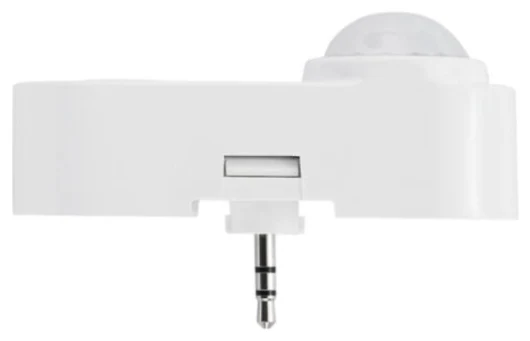
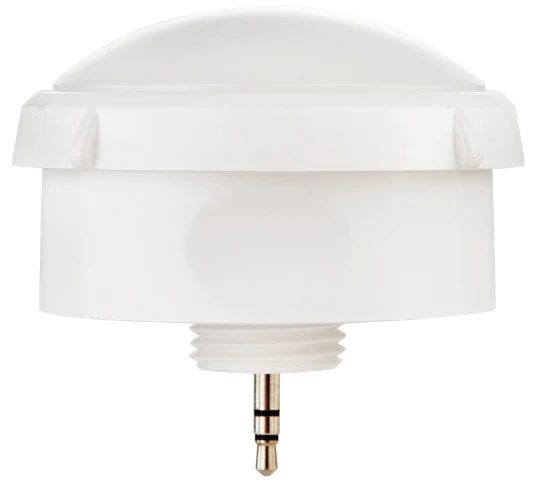
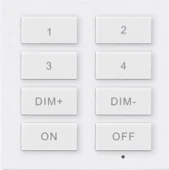
With Bluetooth Mesh, sensors and luminaire nodes only need their power supply. According to their data sheets, our luminaire sensors such as the IFS108 and the high bay sensor EFS106 are powered directly from the 12 V auxiliary output of the LED driver. Wall switches such as the WP108E run on batteries and can be fixed anywhere. Particularly in halls, where any work at ceiling level calls for an elevating work platform, this shortens installation considerably.
Flexibility in operation
In both systems, groups and scenes are defined in software. With DALI, this is done via the controller or commissioning software, as long as the devices concerned are on the same line or in the same controller network. If the layout of a space changes substantially, the wiring may still have to be adapted.
With Bluetooth Mesh, zones and groups are managed entirely in the app. If an open-plan office is divided or a hall is split up differently, you reassign sensors and luminaires without touching any cables. For spaces with frequent tenant changes, this is a financial advantage that recurs regularly over the life cycle.
Planning and commissioning
With DALI, the electrical planner plans lines, bus power supplies and cable routes, and addressing takes place during commissioning. The process is well established and many electrical contractors are familiar with it.
With Bluetooth Mesh, other questions come to the fore: where are the critical radio links, how densely are the devices placed, where do the gateways go? Metal racks, reinforced concrete and shielded luminaire housings affect the range. These points belong in the preliminary planning. The grid planner helps with sensor layout, and our guide to planning occupancy sensors gives general advice.
Data, monitoring and BMS connection
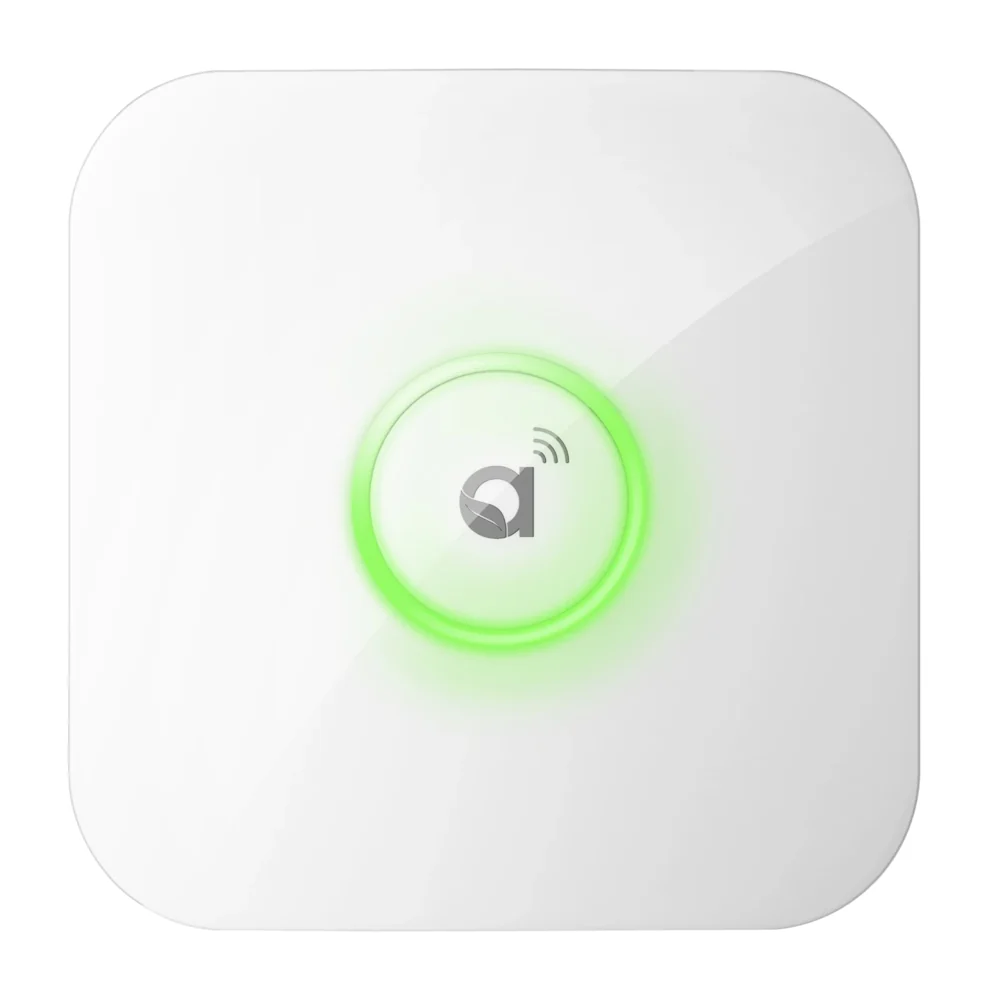
DALI-2 and D4i can provide operating data from the luminaire, which reaches a building management system via controllers or gateways. With Bluetooth Mesh, the sensor data travels over the network to the gateway. In our projects, the AU-Manager does this job: it collects occupancy and consumption data, displays it graphically in the Autani EnergyCenter and can pass it on to the BMS via BACnet/IP. Details are in our guide to BMS integration via BACnet and Modbus and on the page on energy monitoring and BMS.
This also matters legally in Germany: under § 56 GModG, non-residential buildings above the 70 kW threshold need automatic lighting control and building automation with monitoring by 31 December 2029. The Act does not prescribe which technology you choose. For an overview, see lighting control under the GModG.
When each one fits
DALI is a good fit if
- a new build or major refurbishment is coming up and cable routes are being replanned anyway,
- you want central lighting control with many control gear devices on fixed lines,
- the BMS is already designed for DALI gateways.
Bluetooth Mesh is a good fit if
- you want to retrofit during ongoing operation and no bus cable is in place,
- you are equipping halls, warehouses or large areas with high ceilings,
- spaces are frequently repurposed or reorganised,
- you are planning luminaire-level lighting control (LLLC) with one sensor per luminaire.
The two worlds are not mutually exclusive. A luminaire can contain a DALI or 0–10 V driver while the sensors communicate wirelessly between luminaires. Our guide to dimmable LED luminaires: 1–10 V, 0–10 V, DALI explains which interfaces our components support. For halls, it is also worth looking at warehouses and logistics, and for offices at offices and workplaces.
How we can help
Our focus is retrofitting: we turn existing LED luminaires with dimmable 0-10 V or DALI drivers into intelligent lighting using sensors and app-based lighting management, with no new luminaires and no new control cabling. Details are on our retrofit page.
We rely on Bluetooth Mesh because it requires the least intervention in existing buildings. We survey your building on site, plan zones and sensor positions and show you the lighting control in advance in 3D in Sensora. Installation is usually carried out by us, or by your own electrical contractor if you prefer. Occupancy detection, zoning and monitoring via the AU-Manager come with all sensors. Get in touch via our contact page.
Frequently asked questions
What is the main difference between DALI and Bluetooth Mesh?
DALI is a wired digital bus and needs a control cable to every luminaire. Bluetooth Mesh is a wireless network in which sensors and luminaires communicate without additional control cabling. Both allow groups, scenes and feedback.
Is DALI more reliable than wireless?
Both technologies are designed for professional use. DALI is independent of the radio environment, while Bluetooth Mesh relays messages over several paths and becomes more robust with each device. With wireless, what matters is planning that takes metal, concrete and device density into account.
Which is better for retrofitting existing buildings?
In existing buildings, Bluetooth Mesh usually has the advantage because no new control cables have to be run. Sensors are powered from the LED driver or by battery, and groups are created via the app.
Can I combine DALI luminaires with wireless sensors?
A luminaire can contain a DALI driver while the sensors communicate wirelessly. The Keilton+autani components such as the FA102 dim via 0–10 V or PWM.
Can both systems be connected to a building management system?
Yes. DALI installations are integrated via controllers or gateways. With Bluetooth Mesh, the AU-Manager provides occupancy and consumption data in our projects, optionally via BACnet/IP.