A background light, often also called the corridor function, means that lighting does not go out immediately when nobody is present, but first dims to a low level. When someone enters the area, the light returns to full output with no noticeable delay. For corridors, stairwells, halls and car parks, this principle combines energy savings with orientation and safety, and it increases acceptance of lighting control among the people in the building.
How the corridor function works
Occupancy control with background light works in stages:
- Presence: the sensor detects a person and the zone goes to the set lighting level, with daylight-dependent control if required.
- Hold time: if no more movement is detected, the light stays at this level for an adjustable time.
- Background light: the zone then dims to a low level. The area remains visible and consumption falls considerably.
- Off (optional): after a further waiting time, the zone can switch off completely, or stay at background light permanently, for example during operating hours.
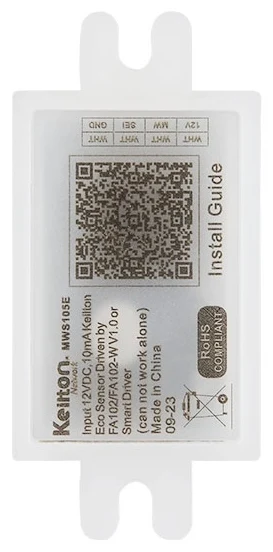
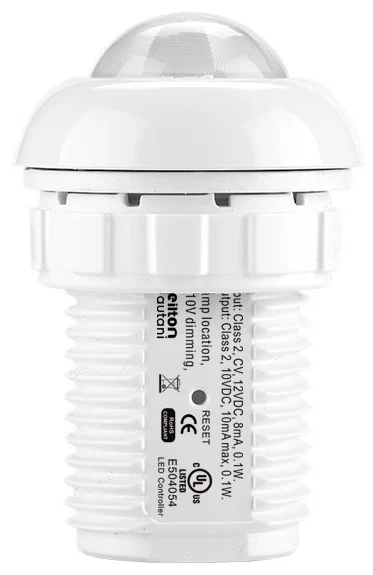
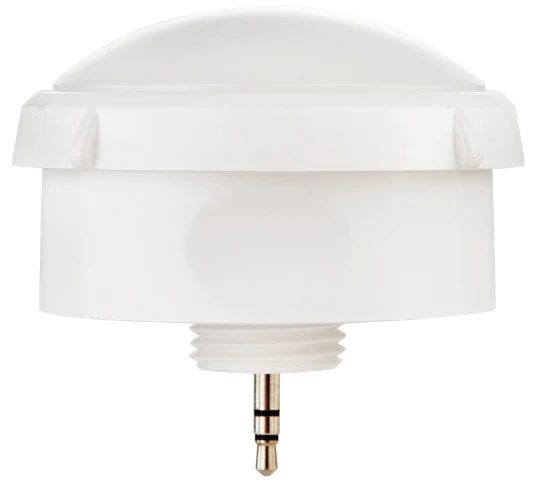
Our sensors support this logic. According to its data sheet, the MWS105E microwave sensor offers an adjustable delay time and two-stage dimming via the Keilton+autani app. Luminaire sensors such as the IFS105SE for corridors or the EFS106 for halls communicate via Bluetooth Mesh and can therefore control entire groups together.
Why dimming is often better than switching off
Orientation
A completely dark corridor that only lights up when you enter feels unpleasant to many people. With background light, you can see where you are going before you enter. The structure of the space stays recognisable, particularly in long corridors, on stairs and in large halls.
Safety
Background light reduces the risk of walking into a dark area and makes it easier to spot obstacles, vehicles and other people. In halls with industrial trucks or car parks with vehicle traffic, this is an important consideration. However, it does not replace planned safety lighting, which remains a separate system with its own requirements.
Acceptance
Lighting control only works if people do not bypass it. If the light goes out too abruptly, sensors get taped over, people demand permanent-on switches, or hold times are set so long that hardly anything is saved. A gentle dimming, on the other hand, is barely felt as an intrusion. So the control stays active over the long term, and the savings stay real.
Fewer switching cycles
LED luminaires tolerate frequent switching much better than conventional lamps. Even so, it is more pleasant and technically gentler in busy areas to dim between full light and background light rather than switching on and off every few minutes.
Typical areas of use
| Area | Typical situation | Sensible logic | Suitable sensors per data sheet |
|---|---|---|---|
| Corridors and stairwells | short, irregular use | background light during operating hours, off at night | IFS105SE, IFS108, MWS105E |
| Warehouses and production halls | aisles and routes, sporadic traffic | aisle at full light when occupied, neighbouring areas at background light | EFS106, EFS104 |
| Multi-storey and underground car parks | vehicles and pedestrians, long quiet periods | background light for orientation, bright ahead along the driving route | MWS105E in a suitable luminaire, EFS106W with IP66 |
| Ancillary rooms | infrequent use | off rather than background light | MWS105E, BCS107 |
Halls and warehouses
The corridor function pays off particularly well in halls, because large areas are often only used in sections. When a high bay sensor detects movement in a rack aisle, the light comes up there while adjoining areas stay at background light. According to their data sheets, the EFS104 covers mounting heights of 6–15 m with the HBL3-2 lens and the EFS106 covers 6–12 m, and both use the AlgoH2 algorithm for high-rack stores. You can read more in our guides to high bay sensors for warehouses and halls and motion detectors in warehouses and high-rack stores.
Multi-storey and underground car parks
Long quiet periods are typical in car parks, yet enough light has to be available quickly when a vehicle enters. With Bluetooth Mesh, luminaires along the driving lane can be linked into groups, so that an arriving vehicle lights up the way ahead. Microwave sensors also detect movement through thin, non-metallic materials and can therefore be concealed in luminaires. There is more detail in our guide to lighting control in car parks.
Corridors in offices, schools and hospitals
In administrative buildings, schools and hospitals, corridors are connecting routes that are used occasionally almost all day. Background light during operating hours and switching off outside them is a proven combination here. You will find advice on the individual building types under lighting control in schools and sports halls and lighting control in hospitals and care homes.
Choosing the right hold times
Hold time and background light level are the two settings that decide savings and acceptance. There are no fixed recipes, but there are principles:
- Hold times set too short mean that the light drops while someone is still in the room, for example during quiet work. This is the most common reason for complaints.
- Hold times set too long waste savings, because empty areas stay fully lit for a long time.
- Traffic areas generally tolerate shorter hold times than work areas, because people are moving there and are easily detected.
- The background light should be high enough for routes to stay recognisable and low enough for the dimming to be worthwhile.
The best way to the right values is through data. Because every project of ours is implemented with the AU-Manager, all sensors supply occupancy data. This lets you see how zones are actually used and adjust hold times in a targeted way after the first weeks of operation. You can read more in our guide to energy monitoring with occupancy data.
Background light and requirements
During use, lighting control has to keep to the required illuminance values, for example under EN 12464-1 and, in Germany, ASR A3.4. Background light only applies when no demand is detected. Our guide to workplace illuminance explains how to reconcile control and requirements.
Occupancy control is also gaining legal importance in Germany: under § 56 (6) GModG, automatic lighting control is mandatory by 31 December 2029 in non-residential buildings with systems above 70 kW, and zoning and occupancy detection are "should" requirements and therefore the normal case. A corridor function with occupancy sensors provides exactly these functions. For an overview, see lighting control under the GModG.
Technical requirements
To dim to a background light, a luminaire needs a dimmable LED driver with a suitable interface and a sufficient dimming range. If the sensor sits in the luminaire, it also needs a permanent power supply, for example from a 12 V auxiliary output on the driver. Our guide to dimmable LED luminaires: 1–10 V, 0–10 V, DALI and dim-to-off explains which drivers are suitable. You can estimate how much energy background light and occupancy control save in your building with the savings calculator.
How we can help
Our focus is retrofitting: we turn existing LED luminaires with dimmable 0-10 V or DALI drivers into intelligent lighting using sensors and app-based lighting management, with no new luminaires and no new control cabling. Details are on our retrofit page.
We survey your building on site, define zones, background light levels and hold times together with you, and make the effect visible in advance in our 3D software Sensora. We usually handle the installation ourselves, or your own electrical contractor can do it if you prefer. Using monitoring in the AU-Manager, we continue to optimise the settings during operation. Get in touch via our contact page.
Try it interactively
Room simulator
Frequently asked questions
What is a corridor function in lighting?
With the corridor function, the light does not switch off immediately once nobody is present, but dims to a low background light after a hold time. When someone enters the area, it returns to full output. Optionally, the zone switches off completely after a further waiting time.
Does background light save less energy than switching off?
At the moment nobody is present, a background light uses a little more than a switched-off luminaire. In practice, however, the control is better accepted and less often bypassed, and hold times can be set shorter. An estimate with the savings calculator shows how this works out in your building.
Where does background light make sense?
Above all in corridors, stairwells, warehouses and production halls, and in multi-storey and underground car parks. It provides orientation and safety there. In rarely used ancillary rooms, switching off completely is usually the better choice.
Does background light replace emergency lighting?
No. Safety and emergency lighting is a separate system with its own requirements. Background light is for orientation during normal operation.
How long should the hold time be?
That depends on the use. Traffic areas usually tolerate shorter times than work areas. It is best to start with cautious values and adjust them using the occupancy data that the sensors supply via the AU-Manager.