If you are converting your lighting to LED, you should plan the sensors at the same time. LED lowers the power of each luminaire, while lighting control reduces the hours and the level at which it runs, and the two effects work together. If sensors are only added years later, you pay for planning, ceiling work and often a driver replacement a second time. This guide shows the sensible sequence, what to look for in the luminaires and where the rules and funding stand in Germany.
Why LED alone is only half the solution
An LED luminaire needs much less power than a fluorescent or discharge lamp for the same amount of light. But it stays on for just as long as it is switched on, including in empty aisles, at sunny window seats or at night in a hall. This is where lighting control comes in:
- Occupancy detection switches or dims the light when nobody is there.
- Daylight harvesting only adds the light that is missing, rather than always running at full power.
- Constant light control uses the reserve that new installations have because of the maintenance factor: a new system is deliberately designed to be brighter than necessary at first, so it can run dimmed at the start.
- Monitoring shows where and when light is actually needed.
Together, depending on the building and its use, this offers savings of up to 75% compared with an existing uncontrolled system. You can estimate the figure for your building with the savings calculator. Our guide to calculating lighting control savings explains the method.
The right sequence
An LED project with sensors follows a clear process. The key point is that the control concept must be settled before the luminaires are ordered:
- Survey: record luminaires, drivers, mounting heights, use, daylight and existing cable routes.
- Lighting design: define the required illuminance under EN 12464-1 (in Germany also ASR A3.4). Read more in our guide to workplace illuminance and EN 12464-1.
- Control concept: define zones, background lighting, hold times, daylight areas and data connection.
- Choice of luminaires and drivers: to suit the control concept, with dimmable drivers and sensor preparation. Luminaires are available from TRiALED, for example.
- Installation and commissioning: luminaires and sensors in one operation, followed by configuring groups and scenes.
- Optimisation in operation: fine-tune the settings using the occupancy data.
If you separate these steps, you pay several times: for a second round of planning, for a second visit with an access platform in the hall and possibly for new drivers because the original ones could not be dimmed.
Choosing dimmable drivers
The LED driver determines whether a luminaire can be controlled later at all. In your tender, look out for:
- a dimming interface (0-10 V, 1-10 V, DALI or PWM) that suits the planned system,
- a wide dimming range for background lighting and daylight control,
- dim-to-off, so that the luminaire can switch off via the control signal while a sensor in the luminaire stays powered,
- a 12 V DC auxiliary output (AUX) to supply the sensor or radio module.
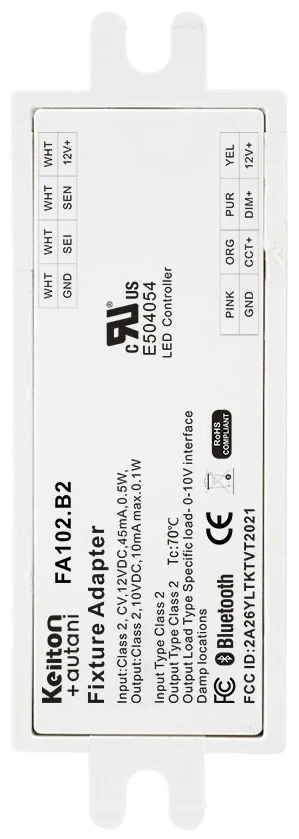
According to the data sheets, our luminaire sensors IFS108 and EFS106 are powered via this 12 V AUX interface, and the FA102 Bluetooth node via the 12 V DC auxiliary output of dimmable LED drivers with dim-to-off. Our guide to dimmable LED luminaires: 0-10 V, DALI and dim-to-off explains the differences between the interfaces.
Factory-fitted sensors: luminaire-level lighting control
It is especially neat when the sensor is already in the luminaire. With luminaire-level lighting control (LLLC), each luminaire has its own occupancy and daylight sensor and communicates with the other luminaires via Bluetooth Mesh. For a conversion, this has several advantages:
- No additional control cables: the luminaire is connected to the power supply as usual.
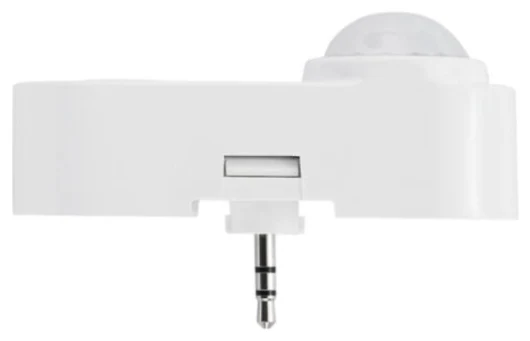
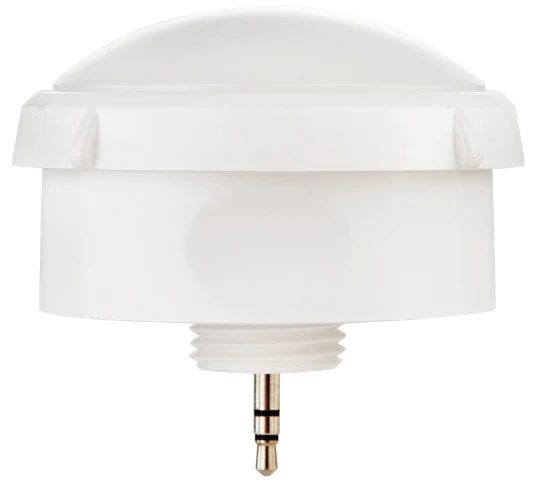
- Plug and play: the IFS108 connects to the luminaire via the 2.5 mm SC05 socket, the EFS106 via the 3.5 mm SC01 socket.
- Fine control: each luminaire responds to occupancy and daylight at its own location.
- Flexible zones: groups are created by app and reassigned when the use changes.
The EFS106 is suitable for halls with mounting heights of 6-12 m, and for offices, corridors and classrooms the IFS108 (up to approx. 6 m) or the IFS105SE (up to approx. 5.5 m). Luminaire manufacturers can integrate the FA102 and connect non-Bluetooth Eco sensors such as the MWS105E. For more background, see our guide to luminaire-level lighting control, and for application examples see warehouses and logistics.
Legal requirements and funding: current status in Germany
Legal requirement under the GModG
In Germany, § 56 (6) GModG requires non-residential buildings with a heating, air conditioning or combined ventilation system above 70 kW to have automatic lighting control by 31 December 2029. Zoning and occupancy detection are "should" requirements, which makes them the normal case. The lighting itself does not count towards the threshold, but the threshold is only the trigger: once it is exceeded, lighting is covered by the requirement as a technical building system. And although § 56 (6) carries no fine according to its wording, the sensors supply occupancy and consumption data for building automation under § 56 (1), and the absence of that automation can be fined. So anyone converting to LED now should think about the control system at the same time. For details, see lighting under the GModG and our overview of the Building Modernisation Act.
Funding
Funding depends on the country and programme. In Germany, a pure LED luminaire replacement is no longer funded through the BEG, but lighting control can be part of a building automation package of at least class B, funded at 15% for non-residential buildings. Regardless of any funding, the savings start on the first day of operation.
Typical mistakes in conversions
- Non-dimmable drivers are chosen to save money and prevent control later on.
- Sensors are added afterwards, which means a second round of work at the ceiling.
- Zones are not planned, so large areas switch as a whole.
- No data: without monitoring, it remains unclear whether hold times and daylight control are really right.
If you are retrofitting an existing installation, you will find further advice in our guide to retrofitting lighting controls. The sensor finder shows which sensor suits your situation.
How we support you
Our focus is on retrofitting: we turn existing LED luminaires with dimmable 0-10 V or DALI drivers into smart lighting with sensors and app-based lighting management, with no new luminaires and no new control cables. For details, see retrofit.
We survey your building on site, plan LED luminaires and sensors as one concept and show you the result in advance in our 3D software Sensora. We usually handle the installation ourselves, or your own electrical contractor can do it if you prefer. Through the AU-Manager, all sensors provide occupancy detection, zoning and monitoring. Get in touch via our contact page.
Try it interactively
Savings calculator
Frequently asked questions
Should I install sensors at the same time as the LED conversion?
Yes, in most cases. Planning, ceiling work and commissioning then only happen once, and the right drivers are chosen from the start. If sensors are added later, a second round of work and sometimes a driver replacement are often needed.
Which LED drivers do I need for lighting control later on?
Dimmable drivers with an interface such as 0-10 V, 1-10 V, DALI or PWM, ideally with a wide dimming range, dim-to-off and a 12 V auxiliary output. According to the data sheets, our luminaire sensors and the FA102 are powered from this 12 V supply.
Is LED conversion still funded?
That depends on the country. In Germany, lighting has not been a separate BEG measure since 21 July 2026, but lighting control can be part of a building automation package of at least class B, funded at 15%.
What does LLLC mean in an LED conversion?
LLLC stands for luminaire-level lighting control: each luminaire has its own occupancy and daylight sensor and communicates wirelessly with the others. Sensors such as the IFS108 or EFS106 connect to the luminaire plug and play via a socket, so no additional control cables are needed.
Is lighting control mandatory in a refurbishment?
In Germany, § 56 (6) GModG requires automatic lighting control by 31 December 2029 for non-residential buildings with a heating, air conditioning or combined ventilation system above 70 kW. As of October 2026, not legal advice.