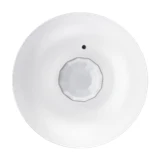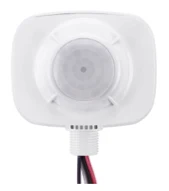
The obligation to install building automation and lighting control under § 56 of Germany's Building Modernisation Act (GModG) doesn't apply if the equipment is technically impossible or economically unreasonable. The yardstick is the economic viability principle in § 5, and § 102 governs waivers in individual cases. For lighting control, this exception rarely holds, because control saves electricity from day one and can be retrofitted wirelessly without new cables. General information, not legal advice.
What exceptions does § 56 GModG name?
§ 56 (1) requires equipment with building automation unless it is technically not possible or economically unreasonable. Paragraph (6) contains the same limitation for automatic lighting control. The two checks are separate: building automation being difficult in a building says nothing about the lighting.
There is also a special rule. If a system that doesn't meet the requirements was installed in the three years before 1 January 2027, paragraph (4) gives ten more years for the upgrade. The exceptions for defence buildings in paragraph (5) are irrelevant to most operators.
When is something economically unreasonable?
§ 5 GModG sets out the principle. Obligations must be achievable with the state of the art and economically justifiable. They count as justifiable if the expenditure can be recovered through savings within the usual service life. For existing buildings, the remaining expected service life must be taken into account.
For a calculation you therefore need:
- the investment in sensors, installation and commissioning,
- current lighting electricity consumption,
- the expected savings,
- the usual or remaining service life.
Calculating lighting control savings and the payback example show how this works. The savings calculator provides a first figure.
What does a waiver under § 102 involve?
Under § 102, the authority responsible under state law must grant a waiver on application by the owner or developer if the aims of the act are achieved to the same extent by other measures, or if the requirements cause undue hardship in the individual case. Undue hardship exists in particular if the necessary investment can't be recovered or is out of proportion to the value of the building.
These examples show where a waiver is conceivable: a building due for demolition in the foreseeable future, for instance, or very short operating hours with very low consumption. Whether that is enough in a given case is for the authority to decide.
Why the exception rarely holds for lighting control
If you are hoping for an exception, bear two things in mind:
- Control saves from the start. Unlike some measures on the building envelope, lighting control cuts electricity use from the first day of operation. As a guide from our projects, sensors alone save more than 60% of lighting electricity, which makes unreasonableness hard to justify.
- More is technically possible today. The old obstacle of having no control cables in the ceiling disappears with wireless. Bluetooth mesh needs no new cables, and battery-powered sensors need no cables at all.
Not every luminaire can be controlled, though. Old luminaires with a non-dimmable driver need a new driver or new technology. That is a cost item, but rarely a technical impossibility. See Reading the LED driver label.
What about the "should" requirement?
Zoning and occupancy detection are worded as "should" in § 56 (6) sentence 2. As a rule, that means this is how it is to be done, and deviations need a clear reason. So record any deviation in writing.
A sensible way to proceed
- Check first whether you are affected at all: the trigger is a system above 70 kW.
- Have luminaires and drivers surveyed.
- Calculate investment and savings.
- Document the result, even if it speaks in favour of implementation.
- If you are planning to apply for a waiver, seek legal advice and talk to the authority early.
How we can help
We survey your building on site, plan the sensors, show them to you beforehand in Sensora and provide a reliable assessment of savings and effort. We usually handle installation too. Find out more under GModG lighting or get in touch.
Try it interactively
Savings calculator
Frequently asked questions
When does the obligation under § 56 GModG not apply?
When the equipment is technically not possible or economically unreasonable. The yardstick for economic viability is in § 5, and waivers in individual cases are in § 102 GModG. General information, not legal advice.
Who decides on a waiver?
The authority responsible under state law, on application by the owner or developer (§ 102 GModG).
Is a planned demolition grounds for an exception?
It can be an argument, because the remaining expected service life counts for existing buildings. Whether it is enough depends on the individual case, so seek legal advice.
Are high costs alone a reason?
No. What matters is whether the expenditure can be recovered through savings, not how high it is in absolute terms.