Lighting control in food production saves energy wherever lights are on but nobody is working: in raw material and finished goods stores, cold areas, traffic routes, plant and staff rooms, and at lines that are at a standstill. During production itself, lighting stays at the required level. The special issues are hygiene, wet cleaning and cold: sensors must suit the IP rating and the cleaning process, add as few extra components to the ceiling as possible, and be agreed with your quality assurance team.
Where lights burn unnecessarily in food businesses
Food businesses often work in several shifts and have large, high halls. Lighting is often switched on centrally and left running. Typical areas without continuous use are:
- Raw material and finished goods stores: access by forklift or pallet truck, with idle time in between.
- Cold and freezer areas: short visits, if only because of the cold.
- Packing and picking areas: use depends on orders and shifts.
- Lines at a standstill: between orders, during changeovers or with reduced staffing.
- Traffic routes, plant and staff rooms, hygiene airlocks: short, irregular use.
The savings calculator gives an estimate for your areas.
Hygiene and cleaning: requirements for sensors
Food areas have strict requirements for cleaning and foreign body prevention. For lighting control, this means:
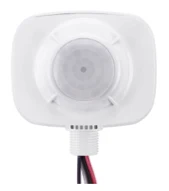
- IP rating to suit the cleaning process: areas with wet cleaning need sensors or luminaires with a suitable IP rating. According to its datasheet, the EFS106W has IP66 in a one-piece nylon housing. We check case by case whether IP66 is enough for your cleaning process, for example with high-pressure or hot-water cleaning. The datasheet does not state suitability for steam jet cleaning.
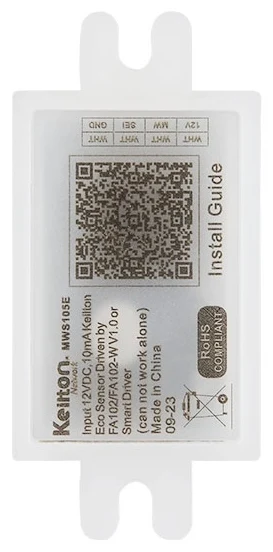
- As few components as possible: every additional device on the ceiling is one more surface to clean. Sensors built into the existing luminaire avoid this. According to its datasheet, the MWS105E microwave sensor is intended for concealed installation in luminaires and can detect through thin, non-metallic covers. It is itself rated IP20, so the luminaire must provide protection against moisture and cleaning. It is connected through the FA102 Bluetooth node.
- Coordination with quality assurance: your hygiene and foreign body management determines which materials and components are permitted in which hygiene zones. We agree the selection with your quality assurance team before installation.
- No interference with production: because the sensors communicate via Bluetooth Mesh, no new control cables are needed. Installation is carried out section by section, coordinated with production and cleaning times.
Zones for food production
| Area | Typical use | Recommended control |
|---|---|---|
| Production line in operation | permanently staffed | full light as specified, no occupancy dimming during operation |
| Line at a standstill, changeover | some of the time | occupancy or time programme based on the shift plan |
| Cleaning | staff with cleaning equipment | full light during cleaning, dimming afterwards |
| Stores, picking | forklift and foot traffic | occupancy per aisle, background light in neighbouring zones |
| Cold and freezer areas | short visits | occupancy, light already on when the door opens |
| Traffic routes | occasional | background light, brought up on movement |
| Hygiene airlocks, staff rooms | brief | occupancy, short hold time |
During production, the aim is not to take light away. The illuminance required for the tasks follows from EN 12464-1, your risk assessment and, in Germany, workplace rule ASR A3.4, and it is maintained in occupied zones. Where daylight enters through rooflights, daylight control can dim the artificial light down to the target value. For more, see the guide Workplace illuminance and EN 12464-1.
Cold and freezer areas
Light in a cold room turns into heat that the refrigeration plant has to remove again. Occupancy control therefore not only reduces the electricity used for lighting but also takes load off the refrigeration. The manufacturer specifies the EFS104, EFS106 and EFS106W high bay sensors for operating temperatures from -30 °C to 55 °C. We clarify case by case whether your room temperature lies within this range and how to deal with condensation at doors. The guide Lighting control in cold stores and freezer warehouses covers this in detail.
Sensors by height and environment
According to the datasheets, these solutions are the main options in food businesses:
- Wet and damp areas, 6 to 12 m: EFS106W with IP66, powered through the driver's 12 V AUX output. It has a photocell for Hold-ON/OFF, but no daylight control.
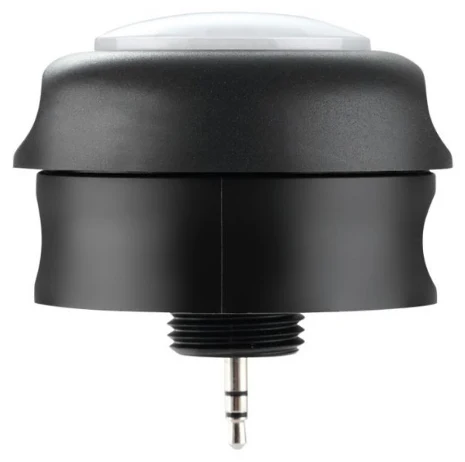
- Dry halls and stores, 6 to 12 m: EFS106 with PIR and daylight harvesting, IP40.
- Halls up to 15 m or luminaires without 12 V AUX: EFS104 (6 to 15 m) with its own power supply for 120-277 V AC, relay and 0-10 V dimming, IP40.
- Lower rooms up to approx. 6 m: MWS105E concealed in a luminaire with a suitable IP rating, connected through the FA102.
Dimming and background light require a dimmable LED driver. If the luminaire has no 12 V AUX output, the EFS104 is the way to go in halls. If fluorescent lamps are still in use, the LED conversion comes first.
Data for energy and quality management
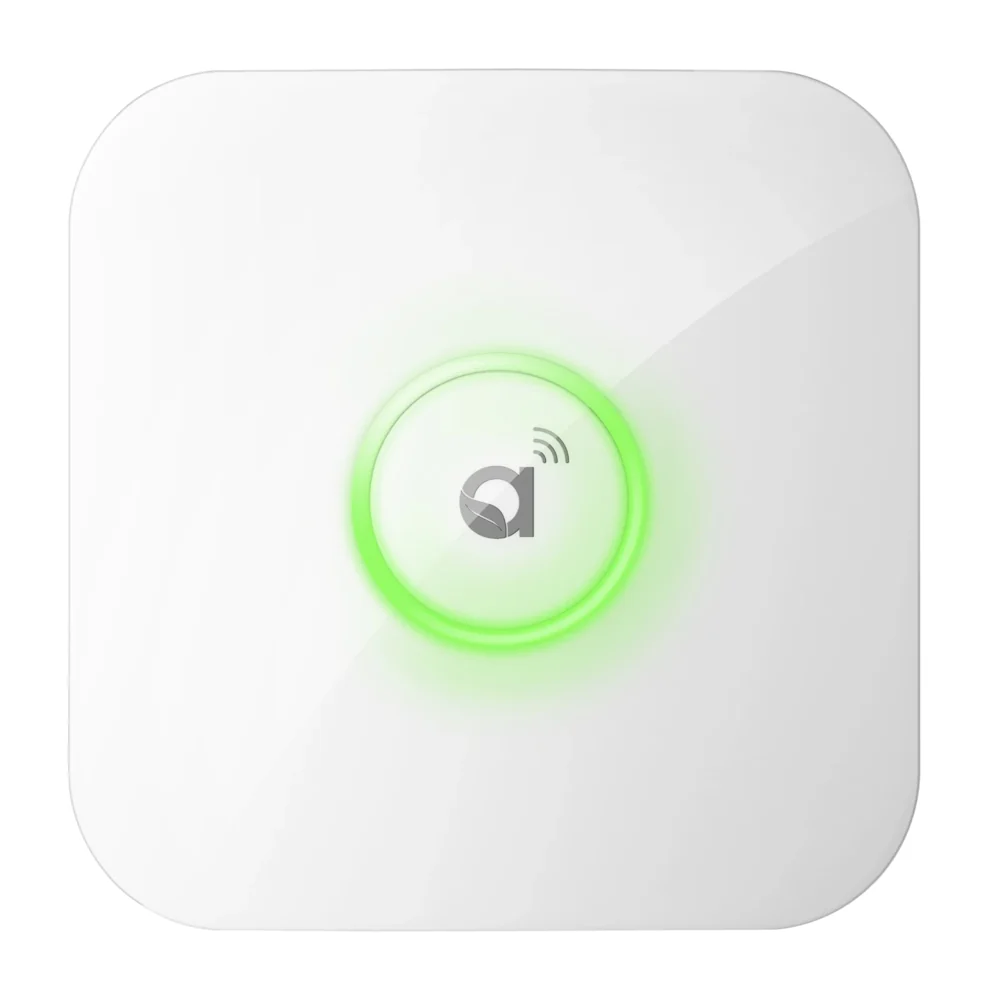
We implement every project with the AU-Manager. All sensors supply occupancy and consumption data, and according to its datasheet the AU-Manager stores system events for more than a year. This helps optimise time programmes and provides figures for energy management and energy reports. Find out more under energy monitoring and BMS integration.
Legal requirements and funding in Germany
Whether § 56 (6) of the German Building Modernisation Act (GModG) applies depends on the building services: in Germany, a non-residential building with a heating, air-conditioning or combined ventilation system above 70 kW rated output must have automatic lighting control by 31 December 2029. Zoning and occupancy detection are "should" requirements and therefore the normal case. The threshold applies per system, and the lighting itself does not count towards it. The obligation lies with the owner, so for rented premises, the landlord. By its wording, the Act provides no fine for paragraph (6), but it remains a statutory "must", and the savings apply from day one regardless. General information, not legal advice. For details, see the GModG and lighting and our overview of the Building Modernisation Act.
In Germany, lighting control can still receive 15% federal BEG funding as part of a building automation package of at least class B (as of October 2026).
How we can help
Our focus is retrofitting: we turn existing LED luminaires with dimmable 0-10 V or DALI drivers into smart lighting using sensors and app-based lighting management, with no new luminaires and no new control cables. See retrofit for details.
We survey your site, match hygiene zones, cleaning processes and mounting heights to suitable sensors, and agree the selection with your quality assurance team. We usually handle installation ourselves, coordinated with production and cleaning times, or your own electrical contractor can install it if you prefer. Every project includes the AU-Manager, so occupancy detection, zoning and monitoring are included. Get in touch via our contact page.
Try it interactively
Savings calculator
Frequently asked questions
Which motion sensors are suitable for wet areas in food production?
For mounting heights of 6 to 12 m, the datasheet names the EFS106W with IP66. In lower rooms, a microwave sensor can be concealed in a luminaire with a suitable IP rating. Whether the IP rating suits the cleaning process is checked case by case.
Is IP66 enough for high-pressure cleaning?
IP66 stands for dust-tightness and protection against powerful water jets. The EFS106W datasheet does not state suitability for steam jet or hot-water high-pressure cleaning. We check your cleaning process before making a selection.
Is the light dimmed at a running production line?
No. The required illuminance is maintained in occupied zones. Savings come from stores, cold areas, traffic routes, side rooms and lines at a standstill.
Do the sensors work in a cold room?
The manufacturer specifies the EFS104, EFS106 and EFS106W high bay sensors for -30 °C to 55 °C. We clarify case by case whether the actual room temperature and condensation at doors are compatible with this.
Does lighting control need to be agreed with quality assurance?
Yes, we recommend it. Your hygiene and foreign body management determines which components and materials are permitted in which hygiene zones. Sensors built into existing luminaires avoid additional components on the ceiling.