Lighting control for car parks and underground garages combines two goals that are often seen as contradictory: safety and savings. The solution is not to switch off, but to keep a permanent background light that rises to full light when there is movement in the zone concerned. Driving aisles, walkways and stairwells stay easy to navigate at all times, while full output is only used where a vehicle is driving or a person is walking.
Why car parks use so much light
Underground garages have no daylight, and car parks only have it at the edges and on the top deck. They are also open for long hours, often around the clock in office buildings, hospitals or residential complexes. The lighting therefore often runs continuously at full output, even though only the occasional vehicle comes in or out during most hours. At night and at weekends many levels are almost empty.
The lever here is not to take light away, but to provide full output only when there is actual use. Because car park lighting has so many operating hours, every reduction has an effect all year round. The savings calculator gives an estimate for your site.
Background light instead of darkness: the safety principle
A dark parking deck feels unsafe, even if the light comes on immediately when there is movement. That is why the background light principle has become established in car parks and underground garages:
- Unoccupied: the luminaires in a zone run at a reduced base level. The level remains easy to see across, cameras keep capturing images and nobody walks into a dark space.
- Occupied: as soon as a vehicle or person is detected, the zone and, where appropriate, the next zone in the direction of travel rise to full light.
- Hold time: when movement stops, the light stays up for an adjustable time and then dims back gently.
The appropriate base level and the illuminance when occupied depend on the use, the operator's requirements and the applicable rules. The control system is set so that it complies with these requirements, but it does not determine them. For more on the strategy, see the guide Background light and corridor function.
Planning zones: driving aisles, walkways, ramps
The quality of car park control is decided by how the zones are formed:
| Zone | Use | Recommended control |
|---|---|---|
| Driving aisles | vehicles in motion | zones along the direction of travel, next zone brought up in advance |
| Rows of parking bays | getting in and out, walking to the exit | own zone or shared with the adjacent driving aisle |
| Ramps and entrances/exits | transition between levels and outdoors | longer hold time, destination level brought up in advance |
| Walkways, stairwells, lift lobbies | pedestrians | own zones, safety-oriented with a generous hold time |
| Pay stations, entrances | staying in place with little movement | higher base level or time programme |
| Top deck, open facades | daylight, weather | daylight or dusk control, weather-protected sensors |
Bringing zones up in advance is the key to acceptance: a car turning into a driving aisle should already see the way ahead lit. In a Bluetooth Mesh network, neighbouring zones can be linked without additional cables, so that a signal from one sensor also brings up the following zone.
Pedestrians first
Vehicles are easy to detect, pedestrians between parked cars less so. That is why walkways, stairwells and lift lobbies get their own sensors looking along the walking routes. Someone walking to their vehicle should not have to reach the driving aisle before being detected.
Which sensors suit car parks and underground garages
Underground garages often have low ceilings, parking decks sometimes have open sides, and wet vehicles bring moisture in winter. Based on the datasheets, these are the main options from our range:
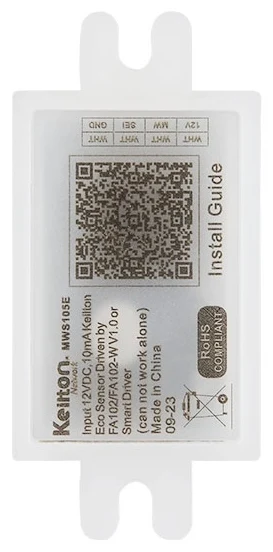
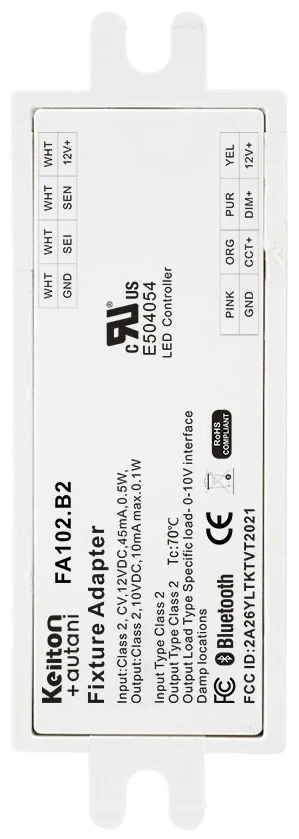
- MWS105E: microwave sensor for concealed installation in luminaires, according to its datasheet for mounting heights of 2.4 to 6 m and a detection range of 6 to 12 m, with sensitivity adjustable from 0 to 100%. The datasheet names underground garages as an area of use in a suitable luminaire. The sensor itself is rated IP20, so the luminaire must provide protection against moisture and dust. It is connected through the FA102 Bluetooth node.
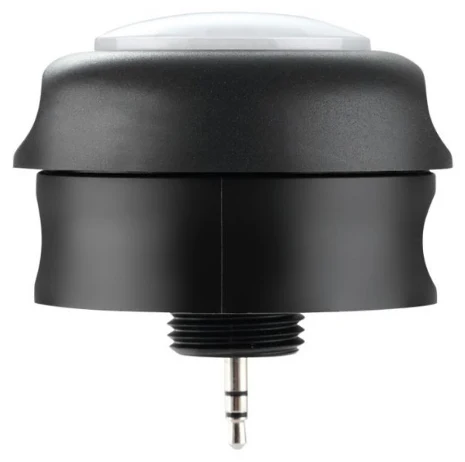
- EFS106W: robust sensor with IP66, a UV-resistant housing and a photocell for Hold-ON/OFF operation. According to its datasheet it is intended for outdoor lighting and car parks, making it an option for open parking decks and access roads with a suitable mounting height of 6 to 12 m.
Microwave sensors also detect movement through thin, non-metallic materials, so they can sit out of sight in the luminaire. The sensitivity must however be set so that movement behind walls or on the neighbouring level does not trigger them. The guide PIR, ultrasonic and microwave sensors compares the technologies, and the Sensor Finder offers a preselection.
Open parking decks and outdoor areas
On the top deck and at open facades, daylight plays a role. Here the lighting is dimmed or switched off during the day and only activated at dusk, with occupancy control added at night. The guide Outdoor lighting control with dusk and astronomical timing explains how dusk and astronomical control work together, and you will find an overview of the solution under outdoor lighting.
Emergency lighting remains a separate system
Safety and emergency lighting in car parks and underground garages is subject to its own requirements and is a separate system. Occupancy control of the general lighting does not replace it and must not impair its function. When planning, we coordinate the lighting control with the existing emergency lighting without interfering with it. For emergency lighting itself there are specialists such as NOTLUX.
Data and operation
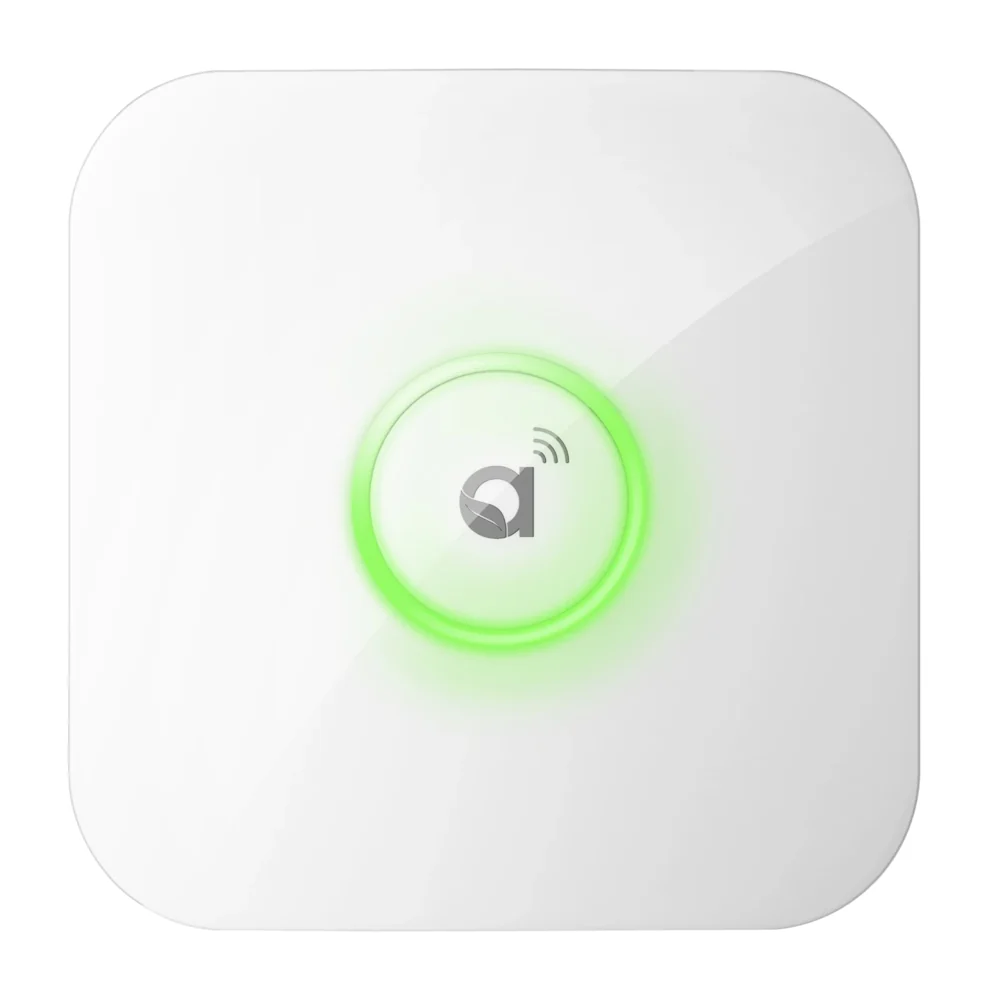
We implement every project with the AU-Manager, so all sensors supply occupancy and consumption data. Operators can see at what times which levels are used and can adjust base levels, hold times and time programmes accordingly, for example by bringing up additional levels at night only when needed. According to its datasheet, access is via LAN or 4G router, including remotely. Find out more under energy monitoring and BMS integration.
Legal requirements and funding in Germany
Standalone car parks often have no heating or air-conditioning system above 70 kW. Underground garages, on the other hand, are often part of a larger non-residential building, and then that building's services count. In Germany, if there is a heating, air-conditioning or combined ventilation system above 70 kW, § 56 (6) of the Building Modernisation Act (GModG) requires automatic lighting control by 31 December 2029. Zoning and occupancy detection are "should" requirements and therefore the normal case. Lighting does not count towards the threshold, but as a technical building system it falls under the requirement once the threshold is reached. And where there is no obligation, the savings still apply from day one. For details, see the GModG and lighting and our overview of the Building Modernisation Act.
In Germany, lighting control can still receive 15% federal BEG funding as part of a building automation package of at least class B (as of October 2026).
How we can help
Our focus is retrofitting: we turn existing LED luminaires with dimmable 0-10 V or DALI drivers into smart lighting using sensors and app-based lighting management, with no new luminaires and no new control cables. See retrofit for details.
We survey your car park or underground garage on site, plan zones for driving aisles, walkways and ramps, and define background light, advance switching and hold times. You can see the result in 3D in advance in Sensora. We usually handle installation ourselves, or your own electrical contractor can install it if you prefer. Monitoring through the AU-Manager is included from the start. Get in touch via our contact page.
Try it interactively
Savings calculator
Frequently asked questions
Can the light in an underground garage be switched off?
It is not usual to switch off completely. Instead, a background light rises to full light when there is movement. The garage stays easy to navigate and feels safe. Which values apply depends on the use and the applicable requirements.
Which sensor is suitable for underground garages?
For concealed installation in luminaires, the MWS105E microwave sensor is suitable, according to its datasheet for mounting heights of 2.4 to 6 m and detection of 6 to 12 m. It is itself rated IP20, so the luminaire must provide protection against moisture. For open parking decks, the EFS106W with IP66 is an option.
How do you stop drivers driving into darkness?
Zones are formed along the direction of travel and linked to each other. When a sensor detects a vehicle, the next zone rises as well. Ramps and entrances bring up the destination level in advance.
Does lighting control replace emergency lighting?
No. Emergency lighting is a separate system with its own requirements. Occupancy control only regulates the general lighting and must not impair the emergency lighting.
Does the German § 56 GModG requirement also apply to car parks?
In Germany, that depends on the building services. The deciding factor is a heating, air-conditioning or combined ventilation system above 70 kW. Underground garages in large non-residential buildings can be affected, standalone open car parks often not. As of October 2026, not legal advice.