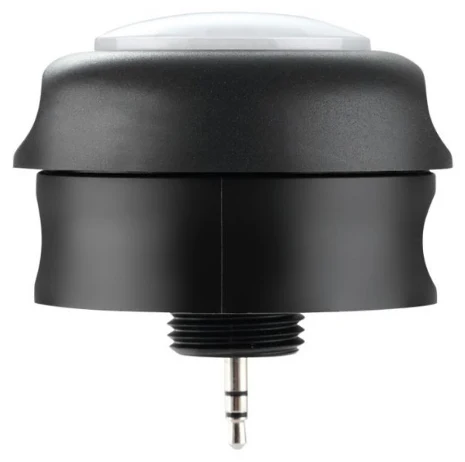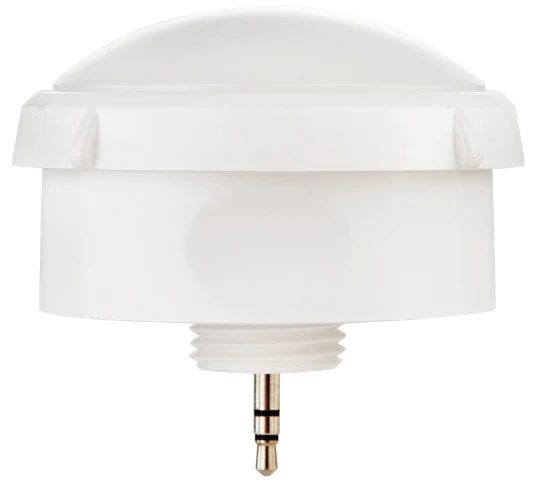
Lighting control pays off particularly well in cold stores and freezer warehouses, because people usually work there only briefly and the lights still often stay on all the time. Occupancy sensors bring the lighting up when it is needed and lower it again afterwards. What matters is having sensors that can cope with cold, moisture and condensation, such as the EFS106W high bay sensor with IP66 according to its datasheet, and a design that takes doors, airlocks and cold-protection clothing into account.
Why lighting control is especially worthwhile in cold stores
Cold stores and freezer warehouses are used differently from ordinary warehouses. Staff drive in, put goods away or pick orders and then leave the area again, if only because of the cold. Between these visits the space is empty. If the lights stay on during that time, there are two losses:
- Electricity for the lighting itself, over many hours with no benefit.
- Additional heat load, because the electrical power of the luminaires ends up as heat in the refrigerated space. The refrigeration plant has to remove this heat again.
Occupancy control reduces both at once. That makes cold areas one of the most economically attractive places to use sensors. The savings calculator gives an estimate for your areas. The relief for the refrigeration plant comes on top in qualitative terms and depends on your installation.
Cold, moisture and condensation: what the sensor has to withstand
Cold stores present conditions that standard occupancy sensors are not designed for. When choosing a sensor, these points matter:
- Temperature range: the manufacturer specifies the EFS104, EFS106 and EFS106W high bay sensors for operating temperatures from -30 °C to 55 °C. Check whether the actual room temperature of your freezer area lies within this range.
- IP rating: according to its datasheet, the EFS106W has an IP66 rating and a one-piece, UV-resistant nylon housing. The EFS104 and EFS106 are rated IP40 and so are intended more for dry areas.
- Condensation and icing: where warm, moist air meets cold surfaces, for example at doors and in airlocks, condensation or frost forms. There is no blanket answer as to whether a sensor is suitable for these conditions in the long term. Check the datasheet and, if in doubt, ask the manufacturer.
- Luminaire and control gear: the EFS106W is powered through the driver's 12 V AUX interface. The luminaire and its driver must be approved for the cold or freezer area. That information is in the luminaire's datasheet, not the sensor's.
Positioning sensors correctly in a cold store
Aisles and racking areas
Many cold stores are organised as high-rack or block storage. As in an ordinary warehouse, the sensor belongs centrally above the aisle, each aisle becomes its own zone, and the lights are brought up in advance at the start of the aisle so that the forklift does not drive into darkness. For aisle-by-aisle planning, see the guide Occupancy sensors for warehouses and high-rack storage. For lens choice at great heights, see High bay sensors for warehouses and halls.
Doors, high-speed doors and airlocks
At doors, air masses of different temperatures meet. For PIR sensors, which respond to temperature differences, this is a possible source of interference. So do not position sensors directly above the door area looking at the opening, but so that they detect the route behind it. Airlocks and anterooms get their own zone, which brings up the adjoining cold zone as soon as someone passes through.
People in cold-protection clothing
Cold-protection clothing dampens the heat radiated by the body, while the contrast with the cold surroundings is high. The most reliable way to find out how well detection works in your cold area is during commissioning: walk and drive through the zones with the real vehicles and in the real work clothing. The AlgoH2 method used by the high bay sensors is intended to improve detection at great heights and reduce false alarms, but it does not replace an on-site test.
Short visits: hold times and background light
Because people usually stay only briefly in cold areas, short hold times seem the obvious choice. But they must not be too short: someone picking orders in an aisle and moving little must not suddenly find themselves in dimmed light. This approach has proved itself:
- Aisles with a short to medium hold time, dimming to background light rather than switching off.
- Main routes, doors and airlocks with a longer hold time or permanent background light, because they are safety-relevant.
- Picking stations with their own zone and hold times that suit the way people work.
The appropriate background level follows from your risk assessment, EN 12464-1 and, in Germany, workplace rule ASR A3.4. See the guide Workplace illuminance and EN 12464-1. Safety lighting is a separate system and is not affected by occupancy control. For more on background light strategy, see Background light and corridor function.
Wireless instead of cable in the cold room
Every additional cable in a cold room means work on insulated walls and ceilings, penetrations and sealing. Because the sensors communicate via Bluetooth Mesh, with a range of up to 100 m according to the datasheet and an improved long-range antenna on the EFS106W, there is no need for new control cables between sensors and the central unit. The wireless connection through cold room walls does depend on how they are built, especially with metal panels. We check this during the on-site survey. For background, see Bluetooth Mesh in lighting control.
Monitoring: keeping an eye on occupancy and consumption
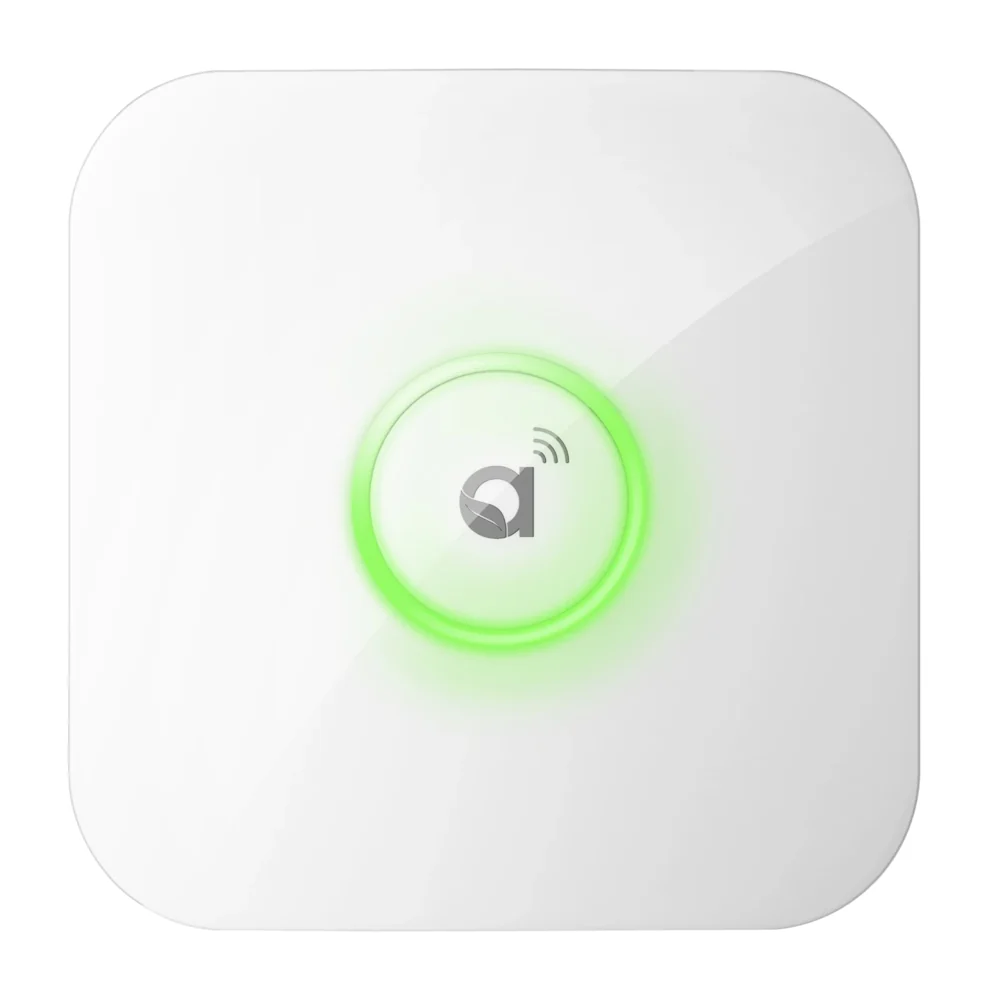
We implement every project with the AU-Manager. As a result, all sensors supply occupancy and consumption data. This is particularly revealing for cold stores: you can see how often cold zones are really entered and adjust time programmes and hold times on that basis. According to its datasheet, the AU-Manager supports BACnet/IP and so can be connected to an existing building management system. Find out more under energy monitoring and BMS integration and, for the legal side in Germany, in our overview of the Building Modernisation Act.
Legal requirements and funding in Germany
Cold stores are non-residential buildings. In Germany, if the building has a heating, air-conditioning or combined ventilation system above 70 kW, § 56 (6) of the Building Modernisation Act (GModG) requires automatic lighting control by 31 December 2029. Zoning and occupancy detection are "should" requirements and therefore the normal case. Whether and how refrigeration plant for the stored goods counts must be assessed case by case, because the threshold applies per system and heating and cooling are never added together. Regardless of this, occupancy control in cold areas saves twice from day one: on lighting and on refrigeration. For details, see the GModG and lighting and our overview of the Building Modernisation Act.
In Germany, lighting control can still receive 15% federal BEG funding as part of a building automation package of at least class B (as of October 2026).
How we can help
Our focus is retrofitting: we turn existing LED luminaires with dimmable 0-10 V or DALI drivers into smart lighting using sensors and app-based lighting management, with no new luminaires and no new control cables. See retrofit for details.
We survey your cold store on site, check temperature ranges, moisture, door situations and wireless paths, and plan zones and hold times to suit your processes. You can see the result in 3D in advance in Sensora. We usually handle installation ourselves, or your own electrical contractor can install it if you prefer. Monitoring through the AU-Manager is included from the start. Get in touch via our contact page.
Try it interactively
Sensor finder
Frequently asked questions
Which occupancy sensor is suitable for a cold store?
For cold and damp areas, the EFS106W high bay sensor with IP66 according to its datasheet is suitable. The manufacturer specifies it for mounting heights of 6 to 12 m and operating temperatures from -30 °C to 55 °C. We check in the project whether it suits your specific conditions.
Do the sensors also work in a freezer warehouse?
According to the datasheet, the EFS104, EFS106 and EFS106W are specified for operating temperatures from -30 °C. Check whether your room temperature lies within this range, and clarify condensation, icing and the suitability of the luminaire case by case.
Why does lighting control save twice in a cold store?
The electrical power of the luminaires turns into heat in the cold room, and the refrigeration plant has to remove it again. Fewer operating hours therefore lower the electricity used for lighting and also take load off the refrigeration.
Does a PIR sensor detect people in cold-protection clothing?
Cold-protection clothing dampens heat radiation, while the contrast with the cold surroundings is high. How reliable detection is gets tested during commissioning with real clothing and real vehicles, and is optimised through position and grid.
Where should sensors go at cold store doors?
Not looking directly at the door opening, because that is where warm and cold air meet. A better position is above the route behind the door, along with a separate zone for airlocks that brings up the adjoining cold zone in advance.