In a hotel, lighting control saves the most where lights burn around the clock without anyone being there all the time: in guest corridors, stairwells, the underground car park and back of house, with its stores, laundry, plant rooms and staff rooms. The principle is background lighting instead of darkness: corridors always stay bright enough for guests to find their way and rise gently to full light on movement. Side rooms switch off after a short time. The guest rooms themselves are a separate subject, where guest comfort takes priority over automation.
Why hotels use so much light
A hotel never really sleeps. Guests arrive late and leave early, and staff work in shifts. As a result, corridors, stairwells and side areas often stay at full power all the time, even though nobody walks along a floor for hours. On top of that comes the underground car park, which also has to be accessible around the clock. These long operating hours make hotels a good place for occupancy control: every hour of dimming adds up over the whole year. The savings calculator gives you an estimate.
Areas and suitable control
| Area | Use | Recommended logic |
|---|---|---|
| Guest corridors | 24/7, irregular | Background lighting, rise on movement, night dimming |
| Stairwells | Sporadic | Background lighting, switching neighbouring floors ahead |
| Lift lobbies | Waiting with little movement | Higher background level, generous hold time |
| Lobby and reception | Permanently staffed, plenty of daylight | Time schedule, daylight control, scenes |
| Conference and seminar rooms | Used in blocks | Occupancy, daylight, scenes by wall switch |
| Underground car park | Vehicles and pedestrians | Background lighting, zones along the driving aisles |
| Back of house | Brief visits, shift work | Occupancy with short hold time, switch-off |
| Guest rooms | Used by the guest throughout their stay | Manual operation and room systems take priority |
Guest corridors: background lighting around the clock
The guest corridor is the showcase for lighting control in a hotel. A guest stepping out of the lift should never look into a dark corridor. So the corridor runs permanently at a background level and rises to full light on movement. Long corridors are divided into sections that switch on ahead of each other: anyone entering the corridor already sees the way to their room lit up. When the hold time ends, the section dims back gently, not abruptly.
At night, the background level can be lowered further. This saves energy and avoids glaring light for guests coming back late. Read more about the principle in our guide to background lighting and the corridor function.
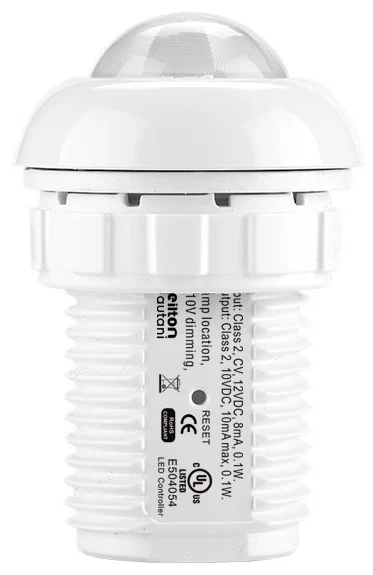
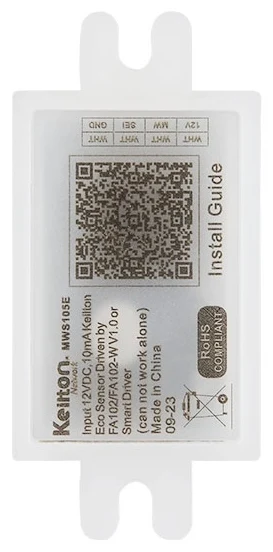
The IFS105SE luminaire sensor is suitable for corridor luminaires, with PIR and daylight harvesting for mounting heights up to approx. 5.5 m according to the data sheet. In recessed luminaires with a diffuse cover, the MWS105E microwave sensor can sit concealed in the luminaire, connected via the FA102 Bluetooth node. Its sensitivity should be set so that movement in adjacent rooms does not trigger it, as microwaves also detect through thin non-metallic materials.
Stairwells and lift lobbies
Stairwells in hotels are rarely used, but at all times of day. Background lighting keeps them accessible, and full light follows on movement. It makes sense to switch the next floor on ahead, so that nobody walks towards a dark flight of stairs. Our guide to commercial stairwell lighting control covers this in detail.
In lift lobbies, guests often wait without moving. A higher background level is more pleasant here than a sensor that dims down during the wait.
Underground car park
A hotel's underground car park follows the same rules as any other: background lighting, zones along the driving aisles, separate zones for walkways and stairwells and switching the next zone ahead in the direction of travel. For details, see our guide to car park lighting control.
Back of house: where light burns unnecessarily for longest
Guests never see these areas, but this is often where light burns longest to no purpose: drinks and linen stores, the laundry, plant rooms, refuse rooms, staff changing rooms, deliveries and connecting corridors. Use is brief and irregular, and the light often stays on because nobody is responsible for it.
- Stores and plant rooms: occupancy with a short hold time, switching off rather than background lighting. Where there is no cable to the ceiling sensor, the battery-powered BCS107 is an option.
- Staff corridors: background lighting during shifts, reduced at night.
- Changing rooms and washrooms: occupancy detection that also sees small movements, for example the EFS107E dual-tech sensor with PIR and ultrasonic according to the data sheet.
- Deliveries and yard: dusk and occupancy control, see outdoor lighting control.
Conference rooms, lobby and restaurant
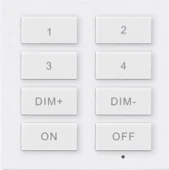
In conference rooms, the light often stays on between two events. Occupancy sensors switch off empty rooms, and daylight control reduces artificial light on bright days. Presentations call for scenes: according to the data sheet, the battery-powered WP108E wall switch offers four configurable scene buttons and dimming buttons, with no cables to lay.
The lobby, reception and restaurant are staffed during opening hours and shaped by their design. Time schedules and daylight control work better here than occupancy switch-off. The lighting mood stays in the hotel's hands.
Guest rooms: comfort first
In the guest room, the guest decides. Many hotels use key card switches or room management systems here. Occupancy-based switch-off in the room is a matter of comfort and is only planned in agreement with the hotel's operations team. Our focus is on public areas and back of house, where savings are possible without any loss of comfort.
Safety lighting stays separate
Safety and emergency lighting in corridors, stairwells and escape routes is a separate system with its own regulations. Lighting control only regulates the general lighting and does not interfere with safety lighting. NOTLUX explains what applies in hotels on its German-language page on emergency lighting in hotels.
Data for operations and sustainability
Through the AU-Manager, all sensors supply occupancy and consumption data. The hotel can see when which floors and areas are used and can adjust background levels and time schedules accordingly. Consumption data also provides a basis for energy and sustainability reports, which guests and business customers are increasingly asking for.
Legal requirements and funding in Germany
Hotels are not primarily used as dwellings, so under § 3 of the German GModG they are non-residential buildings. Whether § 56 (6) GModG applies depends on the building services: if the non-residential building has a heating, air conditioning or combined ventilation system with a rated output above 70 kW, it must have automatic lighting control by 31 December 2029. Zoning and occupancy detection are "should" requirements, which makes them the normal case. The threshold applies per system, and the lighting itself does not count. The obligation falls on the owner, which for rented areas means the landlord. According to its wording, the law provides no fine for § 56 (6), but it remains a statutory requirement, and the savings start from day one regardless. General information, not legal advice. For details, see lighting under the GModG and our overview of the Building Modernisation Act, which also covers the 70 kW threshold.
German BEG funding no longer covers lighting as a separate measure, but lighting control can be funded as part of a class B building automation package (15%, as of October 2026).
How we support you
Our focus is on retrofitting: we turn existing LED luminaires with dimmable 0-10 V or DALI drivers into smart lighting with sensors and app-based lighting management, with no new luminaires and no new control cables. For details, see retrofit.
We survey your hotel, plan zones for corridors, stairwells, car park and back of house and agree background levels and night dimming with your operations team. We usually handle the installation ourselves, section by section during operation, or your own electrical contractor can do it if you prefer. Every project includes the AU-Manager, so occupancy detection, zoning and monitoring are included. Get in touch via our contact page.
Try it interactively
Savings calculator
Frequently asked questions
Can the light in a hotel corridor go off at night?
The usual approach is not to switch off completely, but to use reduced background lighting that rises to full light on movement. This way, guests never walk through a dark corridor, and the power drops considerably during quiet hours.
Where does a hotel save the most with lighting control?
In areas with long burning hours and infrequent use: guest corridors, stairwells, the underground car park and back of house with its stores, laundry and plant rooms. The lobby and restaurant benefit more from time schedules and daylight control.
Do occupancy sensors disturb hotel guests?
Not if they work with background lighting, gentle dimming and suitable hold times. The light is already there when guests enter and rises unobtrusively. In guest rooms, manual operation and room systems take priority.
Does Germany's § 56 GModG also apply to hotels?
Hotels are non-residential buildings. In Germany, if the building has a heating, air conditioning or combined ventilation system above 70 kW, automatic lighting control is required by 31 December 2029. General information, not legal advice.
Can lighting control be retrofitted while the hotel is operating?
Yes. Because sensors sit in or on existing LED luminaires with dimmable drivers and are networked wirelessly, no new control cables are needed. Installation can take place floor by floor or section by section.