Now that hybrid working is part of everyday life, offices are only partly occupied on many days, yet the lights are often on across whole floors. Networked lighting control with an occupancy and daylight sensor in each luminaire only provides light where people are actually working, and adjusts it to the available daylight. At the same time, the sensors supply occupancy data you can use to plan space, desk sharing and cleaning. This guide is for facility managers, owners and tenants of office space.
What hybrid working means for lighting
An office used to be largely occupied from morning to evening. Today, office days and home-working days alternate, teams come in on fixed weekdays and desk sharing spreads people across the floor. The result: there may be only a few employees on a floor, spread over different zones.
Conventional lighting with group switching per floor or open-plan area switches on the entire space in this situation. A control system that decides per luminaire or per room only lights the areas in use. Neighbouring zones can be dimmed to a background level so that the space does not feel dark and uninviting.
Occupancy and daylight per luminaire
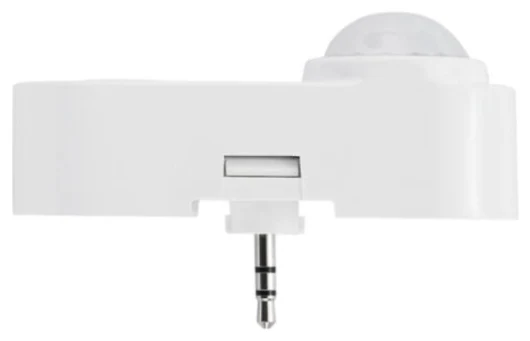
The finest control comes from giving each luminaire its own sensor. Luminaire sensors such as the IFS108 (mounting heights up to approx. 6 m) or the IFS105SE (up to approx. 5.5 m) combine PIR occupancy detection and a daylight sensor in a compact housing. The compact design makes the IFS108 especially suitable for office luminaires. The principle is known as luminaire-level lighting control and is explained in our guide to luminaire-level lighting control.
Advantages of control per luminaire:
- Fine zoning: each luminaire responds to the occupancy beneath it, without any elaborate wiring of zones.
- Daylight per workplace: luminaires near windows dim more than those further into the room. Read more in our guide to daylight harvesting.
- Flexible when layouts change: if the furniture moves, groups are reassigned by app rather than rewired.
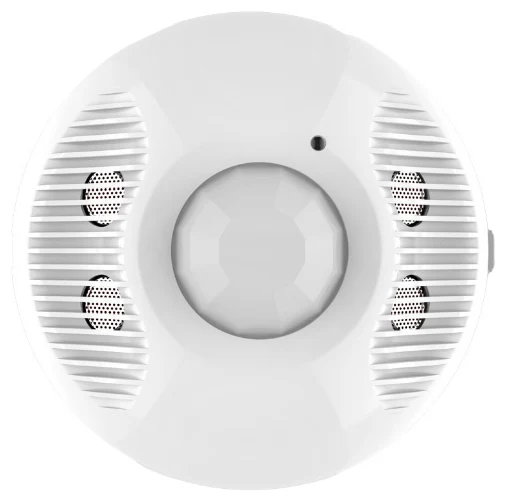
For single offices, meeting rooms and focus rooms, a ceiling sensor covering the whole room is often the better choice. The EFS107E combines PIR and ultrasonic for rooms up to 56 m² and detects even the smallest movements, for example during focused reading or typing. Our guide to occupancy vs. motion detectors explains why an occupancy sensor is the right choice in the office.
Important: the control system has to maintain workplace illuminance under EN 12464-1 (and, in Germany, ASR A3.4), see workplace illuminance and EN 12464-1.
Occupancy data for space planning
Nearly every hybrid office faces the same question: do we still need this space? How many desks are occupied on a typical Tuesday, and which meeting rooms are mostly empty?
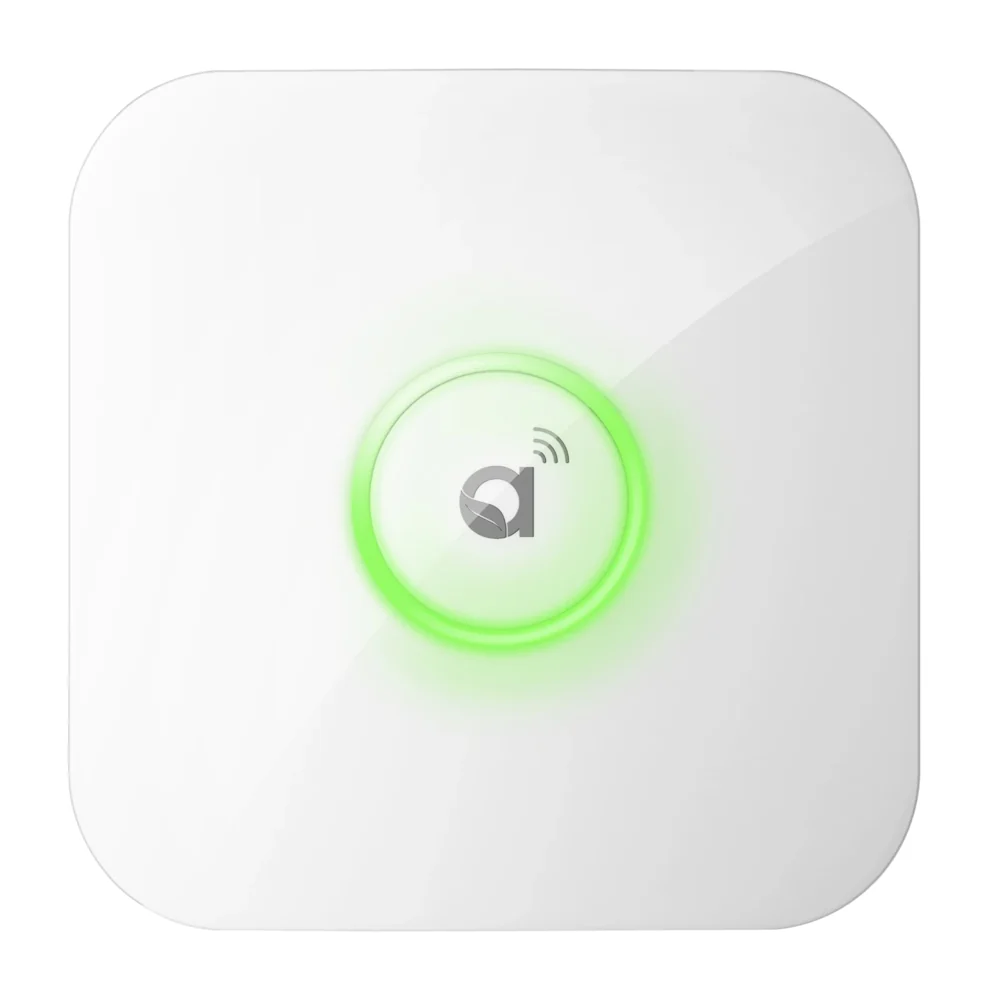
Because every one of our projects is implemented with the AU-Manager, all occupancy sensors supply occupancy data as well as controlling the light, so monitoring is included. The EnergyCenter displays real-time and historical data graphically and stores system events for more than a year. This reveals patterns:
- Use by weekday and time: on which days are which zones full, and on which are they empty?
- Room use: which meeting rooms are actually used, and which hardly at all?
- Space consolidation: can floors or zones be closed on quiet days, so that lighting, heating and ventilation are reduced there?
- Cleaning on demand: cleaning intervals can be aligned with actual use.
Read more in our guide to energy monitoring and occupancy data. Occupancy data shows whether a zone is in use, not who is sitting there. Even so, you should agree how the data is handled with your data protection officer and, where applicable, your works council.
Scenes and operation with the WP108E
Automation is good, but users want to stay in control. Meeting rooms in particular need different lighting situations: full light for workshops, dimmed light for on-screen presentations, cleaning light in the evening.
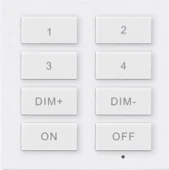
The WP108E is a battery-powered Bluetooth wall switch with eight buttons: four freely configurable scene buttons, DIM+ and DIM−, as well as ON-AUTO and OFF. Preset scenes include ON, OFF with a delay of 15 minutes to 4 hours and AUTO/ON. The switch is linked to one or more lighting groups via the Keilton+autani app and can be placed at existing switch positions without any chasing or cabling.
A useful side effect: users can switch off or dim the light manually, and occupancy control then automatically takes over again.
Wireless retrofit during operation
Most office space is in existing buildings, and new control cables in ceilings and walls are expensive and disruptive. Via Bluetooth Mesh, sensors, luminaires and switches communicate wirelessly. Good options for a retrofit are:
- Luminaire sensors for LED luminaires with a sensor connection, see LED retrofit with sensors.
- BCS107 battery sensor with PIR and daylight harvesting and up to ten years of battery life, where no power supply is available at the ceiling.
- WP108E battery wall switch instead of new switch cables.
This allows floors to be converted section by section while people work normally in the remaining areas. Read more in our guide to retrofitting lighting controls and on our solution page for offices and workplaces.
Legal requirements and funding in Germany
Office buildings are non-residential buildings. In Germany, where a heating, air conditioning or combined ventilation system exceeds 70 kW, § 56 (6) GModG requires automatic lighting control by 31 December 2029. The threshold applies per system, not per tenant: with several tenants sharing a central plant, it is the system that counts. The lighting does not count towards the threshold, but as a technical building system it is covered by the requirement once the threshold is reached. Zoning and occupancy detection are "should" requirements, which makes them the normal case, and departing from them has to be justified. This is exactly what control per luminaire delivers. According to its wording, § 56 (6) carries no fine, whereas building automation under § 56 (1) does, and the lighting sensors supply occupancy and consumption data for its monitoring.
German BEG funding no longer covers lighting as a separate measure, but lighting control can be funded as part of a class B building automation package (15%). For details, see lighting under the GModG.
How we support you
Our focus is on retrofitting: we turn existing LED luminaires with dimmable 0-10 V or DALI drivers into smart lighting with sensors and app-based lighting management, with no new luminaires and no new control cables. For details, see retrofit.
We survey your office space on site, plan sensors, zones and scenes and show you the lighting control in 3D in advance in Sensora. We usually handle the installation ourselves, or your own electrical contractor can do it if you prefer. Monitoring with occupancy data is always included through the AU-Manager. The savings calculator gives you an initial estimate, and you can reach us about your project via our contact page. Everything on implementation: office lighting control under the GModG.
Try it interactively
Savings calculator
Frequently asked questions
Why is lighting control particularly worthwhile in hybrid offices?
Hybrid offices are only partly occupied on many days, yet group switching still lights the entire area. Occupancy sensors per luminaire or room only switch on the light where people are working, and daylight control reduces artificial light at window seats.
What occupancy data do the sensors supply?
Through the AU-Manager, all occupancy sensors supply data on when which zones and rooms are in use. This shows use by weekday, room use and options for consolidating space. The data shows the occupancy of a zone, not the identity of individuals.
Can employees still operate the light themselves?
Yes. The battery-powered WP108E wall switch offers four scene buttons, DIM+ and DIM−, as well as ON-AUTO and OFF. After a manual intervention, occupancy control automatically takes over again.
Does a retrofit require cabling?
No. Sensors, luminaires and switches communicate via Bluetooth Mesh. The BCS107 battery sensor and the WP108E battery wall switch need no cables. This allows floors to be retrofitted one at a time during operation.
Does the German GModG requirement also apply to rented office space?
In Germany, the 70 kW threshold applies per heating, air conditioning or combined ventilation system, not per tenant. If the threshold is reached, § 56 (6) GModG requires automatic lighting control by 31 December 2029. As of October 2026, not legal advice.